Showing posts with label Elizabeth. Show all posts

Tuesday, June 16, 2026

Valuing kindness above cleverness: Emma's lesson


This blanket is one of the hundreds of themed  products available at Totally_Jane_Austen 


New Yorker cartoon: "Son, if you can't say something nice, say something clever and devastating."

Facebook brought this New Yorker cartoon into my feed. I immediately thought of Jane Austen's Emma. She thought the same way the father in this cartoon does that saying something clever but devastating is an irresistible temptation, but she comes to regret the hurt she has caused. 


While the group is seated for their picnic, Frank Churchill stirs things up by declaring a demand from Miss Woodhouse: 

" 'she only demands from each of you either one thing very clever, be it prose or verse, original or repeated--or two things moderately clever--or three things very dull indeed, and she engages to laugh heartily at them all."

"Oh! very well," exclaimed Miss Bates, "then I need not be uneasy. 'Three things very dull indeed.' That will just do for me, you know. I shall be sure to say three dull things as soon as ever I open my mouth, shan't I? (looking round with the most good-humoured dependence on every body's assent)--Do not you all think I shall?"

Emma could not resist.

"Ah! ma'am, but there may be a difficulty. Pardon me--but you will be limited as to number--only three at once."

Miss Bates, deceived by the mock ceremony of her manner, did not immediately catch her meaning; but, when it burst on her, it could not anger, though a slight blush shewed that it could pain her.

"Ah!--well--to be sure. Yes, I see what she means, (turning to Mr. Knightley,) and I will try to hold my tongue. I must make myself very disagreeable, or she would not have said such a thing to an old friend."

Silver Emma quote pendant  

There is some additional dialog and a bit of narrative until Mr. Knightley is able to confront Emma alone and take her to task:

While waiting for the carriage, she found Mr. Knightley by her side. He looked around, as if to see that no one were near, and then said,

"Emma, I must once more speak to you as I have been used to do: a privilege rather endured than allowed, perhaps, but I must still use it. I cannot see you acting wrong, without a remonstrance. How could you be so unfeeling to Miss Bates? How could you be so insolent in your wit to a woman of her character, age, and situation?--Emma, I had not thought it possible."

Emma recollected, blushed, was sorry, but tried to laugh it off.

"Nay, how could I help saying what I did?--Nobody could have helped it. It was not so very bad. I dare say she did not understand me."

"I assure you she did. She felt your full meaning. She has talked of it since. I wish you could have heard how she talked of it--with what candour and generosity. I wish you could have heard her honouring your forbearance, in being able to pay her such attentions, as she was for ever receiving from yourself and your father, when her society must be so irksome."

"Oh!" cried Emma, "I know there is not a better creature in the world: but you must allow, that what is good and what is ridiculous are most unfortunately blended in her."

"They are blended," said he, "I acknowledge; and, were she prosperous, I could allow much for the occasional prevalence of the ridiculous over the good. Were she a woman of fortune, I would leave every harmless absurdity to take its chance, I would not quarrel with you for any liberties of manner. Were she your equal in situation--but, Emma, consider how far this is from being the case. She is poor; she has sunk from the comforts she was born to; and, if she live to old age, must probably sink more. Her situation should secure your compassion. It was badly done, indeed! You, whom she had known from an infant, whom she had seen grow up from a period when her notice was an honour, to have you now, in thoughtless spirits, and the pride of the moment, laugh at her, humble her--and before her niece, too--and before others, many of whom (certainly some,) would be entirely guided by your treatment of her.--This is not pleasant to you, Emma--and it is very far from pleasant to me; but I must, I will,--I will tell you truths while I can; satisfied with proving myself your friend by very faithful counsel, and trusting that you will some time or other do me greater justice than you can do now."

You can judge for yourself which adaption of the picnic at Box Hill, showed this lesson best, thanks to the compilation here:


With great status comes great responsibility 
The first line of Emma is not nearly as famous as the opening line of Pride and Prejudice, though it also archly conveys the essence of the story: "Emma Woodhouse, handsome, clever, and rich, with a comfortable home and happy disposition, seemed to unite some of the best blessings of existence; and had lived nearly twenty-one years in the world with very little to distress or vex her."

Emma seems to have all that is necessary for happiness. Out of those three attributes, she takes the most pride in her cleverness, taking her wealth for granted and lacking vanity for her appearance, as Mr. Knightley reveals in conversation with Mrs. Weston. 


Like a tragic hero, Emma's great strengths are also what lead to her undoing -- or rather some misjudgments and hurt feelings that the good-hearted Emma never intended. Austen's novels follow the conventions of Shakespeare's comedies rather than the tragedies, so everything works out fine in the end with the main characters properly paired off. 

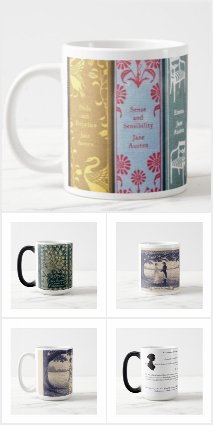
Jane Austen Mugs
Jane Austen Mugs
by Totally_Jane_Austen
However, along the way, our heroine has to admit her faults and mistakes and learn to be better, which she does. Now that I think about it, Emma's lesson is similar to Darcy's who responded to Bingley's suggestion that he ask Elizabeth to dance with "She is tolerable; but not handsome enough to tempt me; and I am in no humour at present to give consequence to young ladies who are slighted by other men."

 Darcy came to regret that quip as much as Emma regretted what she said to Miss Bates. Like Darcy, Emma learns that kindness and consideration for the feelings of others is a greater measure of worth than attempt to manipulate others -- for their own good -- and clever remarks.  

P.S. The value of kindness is one of the Austen themes that The Other Bennet Sister gets right. Mrs. Bennet's lack of kindness to her middle daughter destroys her self-esteem. Her mother's foil is her Aunt Gardiner who is kindness herself. Mary also comments on feeling really bad about having to refuse to dance again with Mr. Sparrow whose only fault was having been kind to her and describes Tom Hayward as "the kindest man."  


Related:


Sunday, June 13, 2021

Jane Austen and Autism


 Some years ago, I wrote about introversion in Jane Austen's heroines here:  Jane Austen's heroines.  What was left out of that perspective was a consideration of introverted heroes. They include both Edward Ferrars and Colonel Brandon in Sense and Sensibility. But the most beloved introvert hero of all is Mr. Darcy of Pride and Prejudice.


Mr. Darcy exhibits such extreme introverted behavior in the earlier parts of the book that some readers interpret it as signs of being on the spectrum. I first came across that theory in a YouTube video


To be fair, it doesn't quite claim that Mr. Darcy is autistic but that what defines his comfort zone, as well as his way of thinking and responding to social and conversational cues really resonates with those who are neuroatypical. 

A few days after I happened across that video, I found the source of theory of Darcy as autistic in Deborah Yaffe's book Among the Janeites It stems from a speech therapist named Phyllis Ferguson Bottomer. Her inspiration was not the book itself but the A&E adaptation that she watched in 2002. She zeroed in on the important interaction in Ch. 31 in which Elizabeth relays her point of view of  Mr. Darcy's rudeness, and he explains himself:

“I certainly have not the talent which some people possess,” said Darcy,“of conversing easily with those I have never seen before. I cannot catch their tone of conversation, or appear interested in their concerns, as I often see done.”

Bottomer seized on the parallel between this explanation and how Temple Grandin explained her experienced her experience as an autistic in her autobiography: "I have always have a hard time fitting in with this rhythm."

Bottomer was so convinced that the novel portrayed people on the spectrum that she started presenting at Jane Austen conferences and wrote her own book on the subject: So Odd a Mixture: Along the Autistic Spectrum in 'Pride and Prejudice.'

I haven't read Bottomer's book, but I have read quite a number of books on introversion (see links
Pride and Prejudice gold-plated necklace
 below). I'm also an introvert myself and do understand the reluctance to make small talk and throw oneself into a dance when one is feeling not truly connected to those around one. 

Perhaps one would argue that introverts have some autistic tendencies, but one could just as well say that autistics have some introvert tendencies. In a Venn diagram, there would be an overlap between the two. Bearing that in mind, one need not conclude that anyone with those shared tendencies is necessarily on the spectrum, or that perhaps we should really normalize what is considered neuroatypical as typical because introverts do make up a substantial number of the population, as much as half, according to Laurie Helgoe. 


Whether one attributes Mr. Darcy's standoffishness to autistic tendencies or to a natural proclivity for introversion, the assumption Jane Austen and Elizabeth make is that it can be countered. In this key exchange, she likens conversational social skills to playing an instrument and so gently chides him by way of analogy: 

“My fingers,” said Elizabeth, “do not move over this instrument in the masterly manner which I see so many women’s do. They have not the same force or rapidity, and do not produce the same expression. But then I have always supposed it to be my own fault—because I will not take the trouble of practising. It is not that I do not believe my fingers as capable as any other woman’s of superior execution.”

Darcy takes this as her seeing a point of commonality between them, which makes him feel more at ease in her presence. Notice how often he responds to what she says with a smile, and this is one of those instances:


Darcy smiled and said, “You are perfectly right. You have employed your time much better. No one admitted to the privilege of hearing you can think anything wanting. We neither of us perform to strangers.”


He takes this to mean she understands them, but in truth she doesn't yet. That will take more time and more opening up on his end, risking vulnerability, which many introverts find extremely difficult. But that is the key to their whole relationship: Darcy has to overcome his natural inclination to connect with Elizabeth, and she has to let go of her extrovert assumption that she can take a full and accurate read on others instantly. They are the paradigm of a successful marriage of opposites.


See
Jane Austen Silhouette Wine Glass


Wednesday, June 5, 2013

Jane Austen's Heroines: Ranging from Extroverted Emma to Introverted Fanny

                               Jane Austen Fiber Doormat


If I were to rank Jane Austen’s heroines on a scale of most extroverted to most introverted, Emma Woodhouse would be at one end and Fanny Price on the other. Elizabeth Bennett would be pretty close to Emma, and Anne Elliot would be second to Fanny on the introvert end.  There are errors that result from both extremes, though Jane Austen seems to stack the deck in favor of introverted heroines.


Extroversion leads the heroine to err with nearly disastrous consequences in Emma. Emma is not to occupy herself in solitary pursuits like reading. There are a few references to her constantly writing up reading lists but never getting through the books on them.  She craves company and influence over others. So when her governess leaves to marry, she feels compelled to find a new companion in the person of Harriet Smith. Then she sets out to remake the character and even history of her friend, giving her unrealistic expectations.  Mr. Knightly castigates Emma for her attempt to redirect Harriet’s life, and  Emma concedes at the end that he was right. Emma likely sees the ugly side of extroversion for herself in the patronizing way Mrs. Elton directs Jane Fairfax.  

In Pride and Prejudice, the exchange in which Miss Bingley attempts to label Elizabeth by claiming that all that interest her is reading is very telling. While Elizabeth is a reader, she doesn’t want to be thought of as a boring bluestocking, a role which may be more readily embraced by an introverted character.  Elizabeth is nothing if not vivacious, though the person closest to her is her sister Jane who is her opposite in some way.  

Jane is sweet and innocent, in the sense that she fails to suspect others of any motives less pure than her own. In contrast, Elizabeth is witty – sometimes bitingly so – and quick to judge others in a negative light.  Elizabeth is the one who concedes her error. But her friend, Charlotte Lucas, who proves most perceptive, suggests that Jane’s shyness was what made it possible for Mr. Bingley to doubt her genuine affection for him.

Mansfield Park’s heroine, Fanny Price, manages to win her heart’s desire though, even though she is careful to keep her feelings for her cousin to herself. Her introversion is not presented as a sign of weakness but of strength. She is certain of what is correct and will not budge from her refusal to participate in the theatricals even when everyone else gives up on any scruples of morals or modesty.  Fanny is the only one of Austen’s heroines who is presented as being perfect in the sense that she has nothing to improve on in the course of the novel as the extroverted heroines do.

Persuasion l Compact Mirror


What happens when an introverted heroine lacks that kind of confidence in her moral sense is presented in Persuasion. Like most introverts, Anne Elliot is a good listener, who provides calming comfort to the more highly-strung members of her family. But she comes to realize that too much listening to others is what caused her own loss of happiness when she allowed her friend (a woman who cast herself in the role of Emma) to persuade her to reject Frederick Wentworth.  As the novel ends happily, she does get a second chance, but she does first recognize the error of her former ways. While she is more right about others than extroverted characters prove, she has to learn to assert her own point of view. Ultimately she does, and gains the perfection and perfect happiness allotted to Fanny Price.

Note: Jane Austen fans can find a variety of merch here: https://www.zazzle.com/store/totally_jane_austen

I appreciate your attention and generosity. Tips accepted via Zelle.

If you enjoyed this content, you can support my work with a tip or purchase from my Zazzle store.

If you enjoyed this content, you can support my work with a tip or purchase from my Zazzle store.
Find great gifts and party accessories for literature lovers in all price points.