Showing posts with label children. Show all posts

Monday, July 6, 2026

New York City as a Wonderland for Children


If you're in or near New York City this summer, I'd recommend you travel to the upper part of Museum Mile --1220 5th Avenue. That's the address of the Museum of the City of New York. On its third floor is the exhibit "Another Wonderland: Abram Champanier's Alice Mural" that closes on September 27th.


                                     Photo of the artist painting the mural shown above on the X feed of NYC Health System 

The artist was a Jewish immigrant from what was part of Russia in 1896 but then became part of Poland. He changed his last name from Sherschewitz or Szerszewicz to a consistent sound but not consistent spelling. Before he adopted the French-spelling Champanier surname in the 1930s, he used Shampanier, a name that appears on his earlier paintings.


Champanier carried out several commissions for the Federal Art Project of the Works Progress Administration (WPA), though he is probably most celebrated for this whimsical set of 16 murals between 1938 and 1940. The murals graced the hospital ward for 40 years.

However, in 1978, the hospital had lost accreditation, and in 1981 it was slated for a complete gut renovation. The murals would have been destroyed as a result if not for the fact that they had come to the attention of Andrew S. Dolkart of the Landmarks Preservation Commission.

He recollected that even in the empty ward, the panels stood out as “witty and fun and bright," and certainly worth saving. In the course of four days in August 1981 a group of volunteers went in and salvaged 15 of the murals that then had to be painstakingly restored over many years. Now you can see the vibrant colors in living color in-person at this exhibit.


My favorite is probably the library scene. Your favorite may be one of the ones that celebrates the subway, the Stature of Liberty, or whatever part of 1930s New York city you consider most iconic.


Another iconic part of NYC that you shouldn't miss is right across the street from the museum. It's the most beautiful part of Central Park: The Conservatory Garden.  The Untermyer Fountain is one of the fountains built around sculptures in this garden. This memorial to Mr. and Mrs. Samuel Untermyer --who also built the lovely gardens in Yonkers -- is a bronze cast of Walter Schott's Three Dancing Maidens.

You can see several more photos I've taken of this delightful garden here

Related:

Sunday, June 28, 2015

The Secret Life of Ghosts, Or Whatever Happened to Aunt Gertrude?

Image from https://upload.wikimedia.org/wikipedia/en/0/05/Mystery.png
You may never have heard of Leslie McFarlane, but odds are good that you've come across at least some of his work, if not the plays, short stories, and articles, then the children's books that have outsold any other title series for boys.

In 1976 (a year before his death) McFarlane  published an autobiographical book, Ghost of the Hardy Boys. The ghost here is the the author himself who depicted the first volumes of the Hardy Boys under the name Franklin W. Dixon. Unlike authors, like George Eliot or Mark Twin,who selected pen names for themselves the writers who churned out popular children's books for the Stratemeyer Syndicate were assigned names, which often carried on to other ghost writers as no author was considered irreplaceable.

The irony of this book is that he devotes many pages protesting that he is far more than the writer who first breathed life into the pair of boy detectives and their formidable Aunt Gertrude only to be forced to both begin and end with the series that he did not own the rights to. The 20 Hardy Boys books he wrote served as his bread-and-butter and kept his family afloat when the Depression hit and other publishers had little or no money for authors.

Work from the Stratemeyer Syndicate served as the artist's equivalent of a day job while he wrote what he considered more serious literary work, which, he did succeed in publishing after a number of false starts. The false starts are as entertaining as they are educational.

McFarlane, who is Canadian by the way, embarks on his writing career by working for newspapers, including J. Jonah Jameson, who discourages his literary ambitions because he views as pulling a potential journalist in the opposite direction needed for a newspaperman. But McFarlane doesn't give up and continues sending out manuscripts to magazines, often, not with any real understanding of what truly fits the publications. But he is not forced to simply learn by trial-and-error, as some editors take the time to give him really valuable feedback and direction.


That is one of the reasons why this book is of particular interest to people who write; it gives quite a bit of insights into the literary world. McFarlane learns to distinguish between what's popular and what's good and how to churn out what's popular for the sake of making money. But here's the rub: though he presents his Hardy Boys work as just for the sake of money, he takes particular pride in his craft, particularly in his infusion of humor and the memorable creation of the boys' Aunt Gertrude.

I put Aunt Gertrude into the title because her treatment in the reworked versions of the books issued in the later part of the 20th Century belie the fact that he does feel connected to his creation, for all his protests that it's all the property of the the syndicate. He is horrified to discover that her dramatic entrance into the series was completely cut in the new editions of the books, as demonstrated to him by a staff writer for a magazine named Bob Stall.

When Stall first approaches McFarlane to talk about the Hardy Boys series, he says he's not interested in discussing that work. After all, he feels he should be recognized for the four novels, 100 novelettes, 200 short stories, 75 television scripts, and 50 films he wrote. But Stall manages to get his attention when he shows him how the books have been eviscerated in the new editions:
They haven't just been streamlined. They've been gutted from beginning to end. Those old books were well written. They had words you could roll around in your mouth and taste. They had funny scenes. They had scenes you could wallow in. These new ones move faster all right, but too fast. There's never a place to stop and linger. That's why the old were so great for a kid. They had flavor. And now the flavor is all gone. 
Stall adds:
The books were written for a literate generation ... But not these new ones. And they'll engender an even less literate generation. 

Remember, this was reported back in 1976.  By today's standards, attention spans were long then; just look at the pacing in movies and television shows of the era compared to today's. Yet, people who remembered the previous generation noticed a difference and saw it as the sign of a trend.  Certainly, kids' books today move at an even faster pace than those that were read in the late 20th Century.

You don't have to be a Hardy Boys fan, and I assure you, I never was, to appreciate McFarlane's reaction or to accompany him on his always entertaining journey to becoming a better writer and laughing with him at his youthful pretensions, which may just remind you of your own.


Thursday, April 23, 2015

Favorite books from the children's section

My daughter recently finished reading The Orphan Train and declared it to be her favorite book. It certainly is good and worth reading. I'm not sure I would call it my favorite. But I'm not sure I can pin down any single book as my favorite. Among all the books I've read, I'd find it too difficult to select one or even a handful for that distinction. I can, however, give a listing of favorites among children's books that  have much to offer adults as well.

To start, there's  a picture book geared toward the very young: Leo Lionni's Frederick. This fable really encapsulates what's behind capturing and representing experience in literature without getting all theoretical.

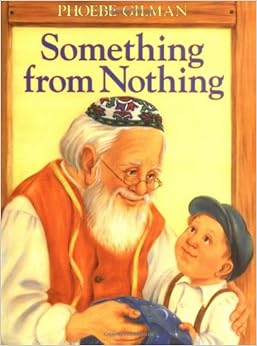
Another book  that touches on a similar theme in a more extended narrative set in the past in a Jewish community  is Pheobe Gilman's Something from Nothing.

While those two works are not as well-known as they should be, my next few selections are likely among the books you have read. They include:
Amelia Bedelia
The Snowy Day (wonderful illustrations)
Madeline
Alice in Wonderland
The Little Prince
A Wrinkle in Time
The Chronicles of Narnia
Matilda (I prefer it to Ronald Dahl's better known and more often adapted Charlie and the Chocolate Factory)
Anne of Green Gables

Not quite as famous, though still classic works include:
All of a Kind Family
The Borrowers
Five Children and It

A few of my favorites have been written relatively recently. They include
Wonder
Frindle
Holes
Everything on a Waffle
The View from Saturday
Note:I tried to keep to books aimed at children 12 and under to limit the list. It would grow a lot longer if I were to include the books marketed to tweens and young adults. Also I may add on more books as I discover or rediscover them.


Related post http://uncommoncontent.blogspot.com/2014/02/notes-on-amazons-100-books.html

Saturday, October 6, 2012

Beyond Pink

[this is a post I originally wrote on another one of my blogs. I brought  it out again here in honor of the month.  ] 
Gayle A Sulike, PhD, a medical sociologist and 2008 Fellow of the National Endowment for the Humanities for her work on breast cancer culture, is the author of Pink Ribbon Blues: How Breast Cancer Culture Undermines Women's Health (Oxford University Press, 2011). Each chapter is followed by pages of footnotes for this carefully researched book that points out the dark side behind the pink ribbon. It is not a cheerful picture, nor a completely hopeful one, as very little true progress has been made in the battle against breast cancer, for all the fanfare of pink products, awareness, and the popularity of "the cause."

Certainly, every woman should read about how mammograms could actually fail women and, in some case, cause harm and should be aware of the risk/benefit ratio, the costs, and the questionable motives of some who benefit.  "Screening mammography is largely responsible for the ever-increasing diagnoses of stage 0 breast cancers, the types that are not technically breast cancers at all." (p.183). Such results stack the deck for the claim that early detection saves lives when the lives "saved" were never in danger in the first place.  In addition to false positives, mammograms can yield false negatives, meaning that the cancer that is there will not be detected. Generally, they are more effective at detection in women over 50 than younger women. In an article that appeared in 2009, "Chief medical officer of the American Cancer Society Dr. Otis Brawley said: 'I'm admitting that American medicine has overpromised when it comes to screening. The advantages to screening have been exaggerated" (p. 20).

Sulike also examines the mythology of the "she-ro" who must rise above her suffering according to the script tied with a pink ribbon. She also touches on "pinkwashing" as a serious problem that gets in the way of true progress. Infantalization of women results from a culture that considers it appropriate to offer teddy bears and Barbie dolls dressed in pink to those afflicted with cancer to show you care. Pink, of course, is the color strongly associated with little girls.  Would men be treated the same way?  Of course, some of this is based on feminist analysis, and reader may just find her take on the significance of Power Puff Girls debatable. But it is, certainly, an intriguing argument.


Her main points are encapsulated both at the beginning and the conclusion of the book. On p. 374 she says:  "Pink ribbon symbolism not only distract the public from the harsh realities of breast cancer and the actions that would be necessary to move toward  its eradication, it also produces a feel-good culture in which the idea that breast cancer is a good cause translates to a belief that supporting it is a good thing that will always lead to good outcomes. The pink ribbon effect demonizes and isolates those who do not happily accept all of the pink goodness the culture has to offer." 

The only weak part of the book is that she does not really build a substantial case for what would work to truly make a difference.  Is it even possible to eradicate breast cancer?  She does say that certain chemicals used by companies are linked to breast cancer, but I'm not quite clear on if she would say that the solution lies there. There are always contributing factors, but so many health conditions do prop up unexpectedly with no known cause. Nevertheless, the book is worth reading for its wealth of information and for its infusion of some healthy skepticism. It's good to  think before going pink or joining up with anything just because it is popular and seems to be  going for a good cause.


I also wrote about pink ribbon marketing last year in

Susan B. Komen for the Cure Criticism Leads to Fallout for Brands


The organization Breast Cancer Action launched Think Before You Pink in 2002 to serve as a watchdog over the pink movement. It calls for action to combat "pinkwashing": the practice of allying with the cause through pink promotions on the very products that contain ingredients linked to cancer. Barbara Brenner, executive director of Breast Cancer Action, states, "Shoppers need to know how much of their money is really going to breast cancer and what's in these products." By drawing the public's attention to the hypocrisy of these companies, Think Before You Pink has succeeded in pressuring Avon to change the formulation of some cosmetics and in getting Yoplait yogurt to go rBGH-free.


For some further reading on this approach, available online, see 
http://m.theatlantic.com/health/archive/2012/10/what-color-is-your-breast-cancer/263459/
http://www.newsweek.com/blogs/the-human-condition/2009/10/13/seeing-red-in-pink-products-one-woman-s-fight-against-breast-cancer-consumerism.html
http://brenna09.wordpress.com/2009/10/26/breast-cancer-awareness-month-does-the-pink-ribbon-take-cause-marketing-too-far/


Wednesday, September 19, 2012

Representing 100 years of childhood


Representing 100 years of childhood
At the rate of 2.5 quintillion bytes of data a day, we have created 90 percent of the data we have in just the past two years. And while 10 percent sounds small in comparison, working with the data of the past presents the same challenges as any Big Data project. You have to consider what to include and what to exclude to come up with the questions, correlations, and contexts that relate to your concerns. They are key to the representation of your data, whether in the form of a report, an inforgraphic, or a physical exhibition.
Some of those essential components were missing in  the  Century of the Child: Growing by Design, 1900–2000 exhibit at the Museum of Modern Art.  It’s described as “the first large-scale overview of the modernist preoccupation with children and childhood as a paradigm for progressive design thinking. The exhibition will bring together areas underrepresented in design history and often considered separately, including school architecture, clothing, playgrounds, toys and games, children’s hospitals and safety equipment, nurseries, furniture, and books.”
Granted, it is impossible to show everything. Yet, I question the omission of an American Girl Doll. (The company that produced it was sold to Mattel  in 1998 for $700 million). The line was introduced in 1986 and was considered a significant departure from the Barbie style that had dominated the doll market at the time. These dolls represented girls rather than full-figured adults and offered some historical insight with their accompanying books. When they first came out, the $100 dolls also raised questions about how much parents are expected to spend on toys, something worth bringing up in relation to consumerism.
Of course, people get a nostalgic kick out of seeing the toys and furniture they associate with their own childhoods, like classic wooden and Lego blocks, an Erector set, an Etch-a-Sketch, a Rubik’s cube, a Slinky, and a Barbie house.  Still, the toys should have offered more than a trip down memory lane. While  the exhibit points to the rather obvious cause for the proliferation of toys associated with the space age, it does not explore how other toys were also a product of their times.
Aside from what different types of toys represent, there is the evolution within toy lines to consider.  For example, Lincoln Logs also started incorporating plastic and premade windows into its sets.  Tinker Toys evolved from simple wooden forms to plastic ones that included specialized pieces and set in pastel colors that were marketed to girls. These modifications raise questions about materials, imaginative play, and gender that should be considered in such an exhibit.
Without context and explanations, you just have random items that do not signify meaning. As Jean Aggasiz said, “Facts are stupid things until brought in connection with some general law.” The same holds true for data, no matter how big. 

I appreciate your attention and generosity. Tips accepted via Zelle.

If you enjoyed this content, you can support my work with a tip or purchase from my Zazzle store.

If you enjoyed this content, you can support my work with a tip or purchase from my Zazzle store.
Find great gifts and party accessories for literature lovers in all price points.