Showing posts with label classics. Show all posts

Thursday, April 23, 2015

Favorite books from the children's section

My daughter recently finished reading The Orphan Train and declared it to be her favorite book. It certainly is good and worth reading. I'm not sure I would call it my favorite. But I'm not sure I can pin down any single book as my favorite. Among all the books I've read, I'd find it too difficult to select one or even a handful for that distinction. I can, however, give a listing of favorites among children's books that  have much to offer adults as well.

To start, there's  a picture book geared toward the very young: Leo Lionni's Frederick. This fable really encapsulates what's behind capturing and representing experience in literature without getting all theoretical.
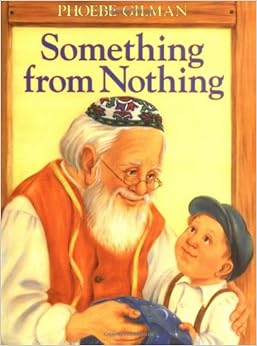
Another book  that touches on a similar theme in a more extended narrative set in the past in a Jewish community  is Pheobe Gilman's Something from Nothing.

While those two works are not as well-known as they should be, my next few selections are likely among the books you have read. They include:
Amelia Bedelia
The Snowy Day (wonderful illustrations)
Madeline
Alice in Wonderland
The Little Prince
A Wrinkle in Time
The Chronicles of Narnia
Matilda (I prefer it to Ronald Dahl's better known and more often adapted Charlie and the Chocolate Factory)
Anne of Green Gables

Not quite as famous, though still classic works include:
All of a Kind Family
The Borrowers
Five Children and It

A few of my favorites have been written relatively recently. They include
Wonder
Frindle
Holes
Everything on a Waffle
The View from Saturday
Note:I tried to keep to books aimed at children 12 and under to limit the list. It would grow a lot longer if I were to include the books marketed to tweens and young adults. Also I may add on more books as I discover or rediscover them.


Related post http://uncommoncontent.blogspot.com/2014/02/notes-on-amazons-100-books.html

Wednesday, February 27, 2013

Dating Homer


From Geneticists Estimate Publication Date of  the "Iliad."
Of course, publication is not exactly the term one would use for an oral work, which, as the research shows seemed to have grown out of various other oral traditions that go back another 500 years or so before the "publication" date. Still, the language itself served as the bread crumbs that mark the trail of origins to when the compilation of stories known as the Iliad became set in the form that has been passed down to generations.
  
"Languages behave just extraordinarily like genes," Pagel said. "It is directly analogous. We tried to document the regularities in linguistic evolution and study Homer's vocabulary as a way of seeing if language evolves the way we think it does. If so, then we should be able to find a date for Homer."

The date they arrived at was 763 BCE, give or take 50 years.

The researchers employed a linguistic tool called the Swadesh word list, put together in the 1940s and 1950s by American linguist Morris Swadesh. The list contains approximately 200 concepts that have words apparently in every language and every culture, Pagel said. These are usually words for body parts, colors, necessary relationships like "father" and "mother."They looked for Swadesh words in the "Iliad" and found 173 of them. Then, they measured how they changed.
 They took the language of the Hittites, a people that existed during the time the war may have been fought, and modern Greek, and traced the changes in the words from Hittite to Homeric to modern. It is precisely how they measure the genetic history of humans, going back and seeing how and when genes alter over time.


I appreciate your attention and generosity. Tips accepted via Zelle.

If you enjoyed this content, you can support my work with a tip or purchase from my Zazzle store.

If you enjoyed this content, you can support my work with a tip or purchase from my Zazzle store.
Find great gifts and party accessories for literature lovers in all price points.