Showing posts with label literature. Show all posts

Monday, July 6, 2026

New York City as a Wonderland for Children


If you're in or near New York City this summer, I'd recommend you travel to the upper part of Museum Mile --1220 5th Avenue. That's the address of the Museum of the City of New York. On its third floor is the exhibit "Another Wonderland: Abram Champanier's Alice Mural" that closes on September 27th.


                                     Photo of the artist painting the mural shown above on the X feed of NYC Health System 

The artist was a Jewish immigrant from what was part of Russia in 1896 but then became part of Poland. He changed his last name from Sherschewitz or Szerszewicz to a consistent sound but not consistent spelling. Before he adopted the French-spelling Champanier surname in the 1930s, he used Shampanier, a name that appears on his earlier paintings.


Champanier carried out several commissions for the Federal Art Project of the Works Progress Administration (WPA), though he is probably most celebrated for this whimsical set of 16 murals between 1938 and 1940. The murals graced the hospital ward for 40 years.

However, in 1978, the hospital had lost accreditation, and in 1981 it was slated for a complete gut renovation. The murals would have been destroyed as a result if not for the fact that they had come to the attention of Andrew S. Dolkart of the Landmarks Preservation Commission.

He recollected that even in the empty ward, the panels stood out as “witty and fun and bright," and certainly worth saving. In the course of four days in August 1981 a group of volunteers went in and salvaged 15 of the murals that then had to be painstakingly restored over many years. Now you can see the vibrant colors in living color in-person at this exhibit.


My favorite is probably the library scene. Your favorite may be one of the ones that celebrates the subway, the Stature of Liberty, or whatever part of 1930s New York city you consider most iconic.


Another iconic part of NYC that you shouldn't miss is right across the street from the museum. It's the most beautiful part of Central Park: The Conservatory Garden.  The Untermyer Fountain is one of the fountains built around sculptures in this garden. This memorial to Mr. and Mrs. Samuel Untermyer --who also built the lovely gardens in Yonkers -- is a bronze cast of Walter Schott's Three Dancing Maidens.

You can see several more photos I've taken of this delightful garden here

Related:

Tuesday, June 16, 2026

Valuing kindness above cleverness: Emma's lesson


This blanket is one of the hundreds of themed  products available at Totally_Jane_Austen 


New Yorker cartoon: "Son, if you can't say something nice, say something clever and devastating."

Facebook brought this New Yorker cartoon into my feed. I immediately thought of Jane Austen's Emma. She thought the same way the father in this cartoon does that saying something clever but devastating is an irresistible temptation, but she comes to regret the hurt she has caused. 


While the group is seated for their picnic, Frank Churchill stirs things up by declaring a demand from Miss Woodhouse: 

" 'she only demands from each of you either one thing very clever, be it prose or verse, original or repeated--or two things moderately clever--or three things very dull indeed, and she engages to laugh heartily at them all."

"Oh! very well," exclaimed Miss Bates, "then I need not be uneasy. 'Three things very dull indeed.' That will just do for me, you know. I shall be sure to say three dull things as soon as ever I open my mouth, shan't I? (looking round with the most good-humoured dependence on every body's assent)--Do not you all think I shall?"

Emma could not resist.

"Ah! ma'am, but there may be a difficulty. Pardon me--but you will be limited as to number--only three at once."

Miss Bates, deceived by the mock ceremony of her manner, did not immediately catch her meaning; but, when it burst on her, it could not anger, though a slight blush shewed that it could pain her.

"Ah!--well--to be sure. Yes, I see what she means, (turning to Mr. Knightley,) and I will try to hold my tongue. I must make myself very disagreeable, or she would not have said such a thing to an old friend."

Silver Emma quote pendant  

There is some additional dialog and a bit of narrative until Mr. Knightley is able to confront Emma alone and take her to task:

While waiting for the carriage, she found Mr. Knightley by her side. He looked around, as if to see that no one were near, and then said,

"Emma, I must once more speak to you as I have been used to do: a privilege rather endured than allowed, perhaps, but I must still use it. I cannot see you acting wrong, without a remonstrance. How could you be so unfeeling to Miss Bates? How could you be so insolent in your wit to a woman of her character, age, and situation?--Emma, I had not thought it possible."

Emma recollected, blushed, was sorry, but tried to laugh it off.

"Nay, how could I help saying what I did?--Nobody could have helped it. It was not so very bad. I dare say she did not understand me."

"I assure you she did. She felt your full meaning. She has talked of it since. I wish you could have heard how she talked of it--with what candour and generosity. I wish you could have heard her honouring your forbearance, in being able to pay her such attentions, as she was for ever receiving from yourself and your father, when her society must be so irksome."

"Oh!" cried Emma, "I know there is not a better creature in the world: but you must allow, that what is good and what is ridiculous are most unfortunately blended in her."

"They are blended," said he, "I acknowledge; and, were she prosperous, I could allow much for the occasional prevalence of the ridiculous over the good. Were she a woman of fortune, I would leave every harmless absurdity to take its chance, I would not quarrel with you for any liberties of manner. Were she your equal in situation--but, Emma, consider how far this is from being the case. She is poor; she has sunk from the comforts she was born to; and, if she live to old age, must probably sink more. Her situation should secure your compassion. It was badly done, indeed! You, whom she had known from an infant, whom she had seen grow up from a period when her notice was an honour, to have you now, in thoughtless spirits, and the pride of the moment, laugh at her, humble her--and before her niece, too--and before others, many of whom (certainly some,) would be entirely guided by your treatment of her.--This is not pleasant to you, Emma--and it is very far from pleasant to me; but I must, I will,--I will tell you truths while I can; satisfied with proving myself your friend by very faithful counsel, and trusting that you will some time or other do me greater justice than you can do now."

You can judge for yourself which adaption of the picnic at Box Hill, showed this lesson best, thanks to the compilation here:


With great status comes great responsibility 

The first line of Emma is not nearly as famous as the opening line of Pride and Prejudice, though it also archly conveys the essence of the story: "Emma Woodhouse, handsome, clever, and rich, with a comfortable home and happy disposition, seemed to unite some of the best blessings of existence; and had lived nearly twenty-one years in the world with very little to distress or vex her."

Emma seems to have all that is necessary for happiness. Out of those three attributes, she takes the most pride in her cleverness, taking her wealth for granted and lacking vanity for her appearance, as Mr. Knightley reveals in conversation with Mrs. Weston. 


Like a tragic hero, Emma's great strengths are also what lead to her undoing -- or rather some misjudgments and hurt feelings that the good-hearted Emma never intended. Austen's novels follow the conventions of Shakespeare's comedies rather than the tragedies, so everything works out fine in the end with the main characters properly paired off. 

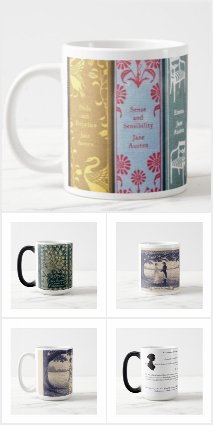
Jane Austen Mugs
Jane Austen Mugs
by Totally_Jane_Austen
However, along the way, our heroine has to admit her faults and mistakes and learn to be better, which she does. Now that I think about it, Emma's lesson is similar to Darcy's who responded to Bingley's suggestion that he ask Elizabeth to dance with "She is tolerable; but not handsome enough to tempt me; and I am in no humour at present to give consequence to young ladies who are slighted by other men."

 Darcy came to regret that quip as much as Emma regretted what she said to Miss Bates. Like Darcy, Emma learns that kindness and consideration for the feelings of others is a greater measure of worth than attempt to manipulate others -- for their own good -- and clever remarks.  

P.S. The value of kindness is one of the Austen themes that The Other Bennet Sister gets right. Mrs. Bennet's lack of kindness to her middle daughter destroys her self-esteem. Her mother's foil is her Aunt Gardiner who is kindness herself. Mary also comments on feeling really bad about having to refuse to dance again with Mr. Sparrow whose only fault was having been kind to her and describes Tom Hayward as "the kindest man."  


Related:


Friday, May 1, 2026

Mary and Marylin: the girl in the glasses finds love

Marilyn Monroe in How to Marry a Millionaire
Mary flanked by Mr. and Mrs. Bennet in The Other Bennet Sister

Having finished reading The Other Bennet Sister after having seen the adaption,* I have a number of observations that I intend to write up. But for today, I'll keep it lighter with something that just struck me, a surprising parallel that the director may have alluded to. 

 In both the book and the adaption, Mary's glasses are made into a big deal. Her mother declares she'll never attract a man if she wears them. It's not just Mrs. Bennet's silliness. The assumption that women in glasses were less attractive persisted well over century later and is very central to the character that Marylin Monroe plays in How to Marry a Millionaire who wanders around unable to recognize people and bumping into things because she has internalized that a woman in glasses would never attract a man.


As depicted in the clip above, Marilyn's character describes herself as "blind as a bat" without glasses, which is why she holds her books upside down while pretending to read. 

I wonder if the director of The Other Bennet Sister adaption had that in mind in setting up a scene in
which Ryder holds a book upside down while pretending to read. This is not in the book, so I can't help thinking the director thought of some other films in which the upside down book proves the character is not reading. 

tom_handing_mary_out_of_a_carriage_keychain

Much more on the adaption to follow. Watch for my argument that Mary Bennet is closer to a Charlotte Bronte heroine -- with striking parallels to Jane Eyre and Lucy Snowe -- than a Jane Austen one, especially in the adaption. If you are a fan of the adaption, check out The Other Bennet Sister: Celebrating Mary Bennet  collection from Totally Jane Austen. 


*That's the order I'd recommend for others to follow to enjoy both experiences and appreciate the differences without getting bothered about deviations from the book while watching. 


Related

Many Happy Returns, Jane Austen                       


Jane Austen at 250

Jane Austen: Love and Money
Jane Austen at the Morgan
Love and Limerence in Jane Austen
Observations on Jane Austen's Emma
Pride, Prejudice and Persuasion: Obstacles to Happiness in Jane Austen's Novels
Three Janes, Two Governesses, and the Abolitionist Movement   


The Big Bow-wow & Bit of Ivory
Jane Austen's Heroines
Jane Austen and Capability Brown
Pride and Prejudice in Job Applications

Sunday, December 8, 2024

Charlotte Brontë's Juvenilia and Fanfiction

What was the original fanfiction? If you look this up, as I did, you'd find that most date it to the 1960s when Star Trek fans  penned their own tales about the characters onboard the Enterprise.  This was, of course, pre-internet, so these stories were shared via actual publication. 

A few article on fanfiction claim that the genre (yes, many would count it as that) predates the world of television. They would claim that references and reimaginings of pre-existing stories can fall under that umbrella term and so count works of  literature like Dante's Inferno and Milton's Paradise Lost as fanfiction for the Bible. Some even contend that Shakespeare's plays are fanfiction because they rework stories that were invented earlier. 

I don't quite buy that broad definition of the term. I'd possibly grant that Sherlock Holmes stories by authors other than Arthur Conan Doyle could rank as fanfiction in depicting a recognized character that someone else had invented in new stories, though I wouldn't say that any work of literature that is infulenced by common stories and myths can be considered fanfiction. 

What's the key differentiator here? I think it may really need to start on the basis of  deep interest in a character they did not first create. But would that character have to originated in fiction for fanfiction? I think not. 

On that basis, I'd content that Brontë's juvenilia constitutes fanfiction -- a term I wasn't familiar with back in the day when I wrote my dissertation. Her depictions of the Duke of Wellington that evolved into the Duke of Zamorna and then the king of Angria really was a Victorian forerunner of modern fanfiction. 

Much in the way fanfiction writers take their inspiration from television characters, Brontë looked to the celebrity figure of her day and cast him in new adventures and then her own world. Whereas Louisa May Alcott was able to profit from her overwrought tales that did sell, Brontë's were not meant for publication. 


Sunday, October 27, 2024

From Brontë to Patchett

I just finished reading The VertsAnn Patchett's latest children's book beautifully illustrated by Robin Preiss Glasser. The contrasting preferences for a birthday celebration between two siblings reminded me of the contrast between a set of cousins in Emily Brontë's Wuthering Heights

In Chapter 24 of Wuthering Heights, Catherine Linton recounts the contrast between Heathcliff's son summed up in their different ideal summer days:

Blue birds


'One time, however, we were near quarrelling. He said the pleasantest manner of spending a hot July day was lying from morning till evening on a bank of heath in the middle of the moors, with the bees humming dreamily about among the bloom, and the larks singing high up overhead, and the blue sky and bright sun shining steadily and cloudlessly. That was his most perfect idea of heaven's happiness: mine was rocking in a rustling green tree, with a west wind blowing, and bright white clouds flitting rapidly above; and not only larks, but throstles, and blackbirds, and linnets, and cuckoos pouring out music on every side, and the moors seen at a distance, broken into cool dusky dells; but close by great swells of long grass undulating in waves to the breeze; and woods and sounding water, and the whole world awake and wild with joy. He wanted all to lie in an ecstasy of peace; I wanted all to sparkle and dance in a glorious jubilee. I said his heaven would be only half alive; and he said mine would be drunk: I said I should fall asleep in his; and he said he could not breathe in mine, and began to grow very snappish. At last, we agreed to try both, as soon as the right weather came; and then we kissed each other and were friends.


These two statements, in particular, encapsulate the differences between introverts who need to 
 recharge in quiet surroundings and extroverts who feel inviograted by activity:

"He wanted all to lie in an ecstasy of peace; I wanted all to sparkle and dance in a glorious jubilee. I said his heaven would be only half alive; and he said mine would be drunk: I said I should fall asleep in his; and he said he could not breathe in mine."

In Pratchett's book, we have that difference depicted in Ivan's desire for solitude and quiet versus Estie's desire to throw a party with a lot of guests and noise. Thought Emily would not have used the terms attached to "vert," as a staunch introvert herself, she, certainly, would have recognized that aspect of human nature. 


Order these here 

Related

Perspectives on Introversion

Working Alone


Thursday, September 12, 2024

Know when to walk away


Moira Rose walks away

Sometimes you just have to walk away

by Ariella Brown


Pip should have walked away from Miss Havisham when he first met her. I applied that lesson today.

Today I walked away from a potential job. Admittedly, it wasn't a really good gig, given the combination of hours required and pay. But it wasn't the low pay that was my main turnoff; it was the delusions of the person in charge. For the purpose of this post, let's call him Irving.

If you've ever read Great Expectations or seen one of the many adaptations produced over the past century, you'd have an indelible image in your mind of Miss Havisham who keeps the moment she was anticipating her canceled wedding frozen in time for years and decades, never moving on.

.victorianweb.org/victorian/art/illustration/dixon/15.htmlScanned image and text by Philip V. Allingham
In this case, it's a site that is forever frozen in 2008 like an extinct woolly mammoth in ice, never updating its approach or appearance or assumptions about effectively engaging an audience.

Irving is not interested in crafting what will truly resonate with people. Nor is he interested in improving the social media outreach to potentially attract more viewers and subscribers.

Irving is only interested in having editors bring his vision to life, maintaining the delusion that this is the way, and it will become perfect. When I pointed out that if it hasn't happened in over 15 years, it is unlikely to arrive at this point, Irving brushed my argument aside.

The site itself and the static cards crammed with hashtags and no images that are used across all their social media channels are stuck in the convention of nearly 20 years ago while the world has moved on. Like Miss Havisham, Irving is stuck in that moment in time when his print paper crumpled, and he's unwilling to change.


Freezing the moment


Backstory: there was a newspaper that did well enough in its market early in this century. But in 2008, it lost its advertising revenue and had to close up shop. The owner decided to pivot to an online format modeled on "The Drudge Report," which he still thinks is the pinnacle of journalism.
No one else think that, certainly not in 2024. Over the decades, Drudge has been criticized repeatedly for biases -- first on the right and then on the left -- and for promulgating hoaxes as real news. Yet, Irving doggedly maintains that this is "an art form" to craft "pithy headlines" that convey a story of the events when grouped together.


Bad models assure bad outcomes


Irving even directed me to the examples on the Drudge site that actually generalize a number of headlines to make them read as a title followed by support. More often than not those modified headlines overly generalize to the headlines of the stories they link to the point of real and deliberate misrepresentation.

As an authentic and honest person (even in marketing) I don't like misleading spin. I don't trust any outlet that does that and don't like contributing to it. Aside form the sleaziness factor, it's not even effective at winning attention and influence.


Why this is a doomed venture


Taking on this job with the intent to improve the site and extend its audience beyond the average of a single visitor a day is doomed because of two fundamental errors in Irving's thinking.

One is that his faith in the power of quality products. He clarified that his primary goal for the site is to make it -- what it has not yet become in over 16 years -- a "quality" site. The assumption that quality will always win out is patently false, as I explained in Building Alone Doesn't Lead to Success


Irving's second fundamental error is in how defines quality, taking the Drudge Report model is the ultimate measure of quality for a news site -- in 2024. That's analogous to declaring the Blackberry the ultimate in mobile technology. It was once upon a time, but not since it was forever displaced by the standard set by Apple's iPhone in 2007. 

Irving has not moved on since that time period, maintaining the site just as it was set up in 2008. That is completely out of touch with people's expectations of the internet today and that both Gen Z and Gen X have now become accustomed to take in our news through social media posts shared by those we follow.

No one (with the possible exception of the die-hard Drudge fans of a certain age like Irving himself) wants to take in a slanted account by reading blocks of text made up solely out of paraphrased headlines. No one would consider that journalism, no matter how much Irving insists that the pithy headline is an art form. .


No profits and no metrics


While stats as a baseline are essential to measure progress, Irving admits that he knows they're dismal but won't look at them. So I used the power of the internet to find out such public information.

How bad is it? Very.

Site traffic: just one visitor a day, which is likely Irving himself.
Social traffic: zero
Referring links; zero
Domain value: zero. For a site that has been active for over 16+ years and that boasts of 25K subscribers, that is beyond pathetic.

How can the site remain active for so long when the cost of running it with two part-time editors and hosting has to come to somewhere between $30,000 and $40,000 a years?

The site is not monetized in any real way. Ostensibly, it has ads, but the ads are all from nonprofits and other projects directly connected to Irving. I suspect that he may just have the nonprofits pay for the ads just enough to cover the operational cost of the site. Alternatively, he may just be keeping it on a money loser to counter-balance profits from his for profit businesses.

In either case, this is a lesson about how markets can only force greater efficiency if you are subject to market conditions. This site -- still hosted on Dreamweaver, a product that has not been supported for years -- would have folded over a decade ago due to its failure to retain the audience it had first won over in print. It's can only be maintained like Miss Havisham herself because there is money coming in from another source to artificially keep alive something that should have died a natural death.


Monday, March 7, 2022

A Novel Series for Women's History Month and Beyond


 A novel series I highly recommend is one based on a set of real-life sisters and their amazing accomplishments. If you have not yet discovered Amy Stewart's Kopp sisters series, allow me to introduce you to it.  When you read the books, always take time to read the author's notes at the end about the historical figures featured in the novels and and where the fiction deviates from facts for dramatic effect or because there is no detailed record to work off for certain aspects. You can also learn about the characters' history on her site. 

Girl Waits with Gun is the first of the series. Set in 1914, it introduces Constance Kopp, as the main heroine who foils those who threaten the sisters' household that includes the irascible Normal and the somewhat flighty but very talented Fleurette.

Lady Cop Makes Trouble  continues their story, focusing on the trials and tribulations Constance faces as one of the few female deputies in the United States in 1915, and the only one in her NJ neighborhood.  

Miss Kopp's Midnight Confessions takes us into 1916 with Constance working through new challenges with her career as a deputy and dealing with Fleurette's desire to spread her own wings. Speaking of wings, Norma's interest in homing pigeons (a bit of fiction, the author admits) takes on increasing importance.

Miss Kopp Just Wont't Quit keeps the story going in 1916 with Constance's adventures and unrelenting pursuit of justice. Fleurette also won't give up on her dreams of being on the stage.

Kopp Sisters on the March*  takes place in 1917 and has World War I bring the sisters in contact with new characters and new situations as they get an opportunity to support the war effort and challenge the assumption of feminine limits in new ways.  Much of this novel centers around a real historical  character named of Beulah Binford, a notorious female in her day.

*Another historical novel I just finished reading relates to what the Kopp sisters series touches on -- the young American women who paid their own way to go to France and contribute to the war effort. I recommend Lauren Willig's Band of Sisters. Like Stewart does in the pages following the story, Willig  clarifies her sources and the inspiration for certain characters and events in the novel.


Set in 1918, Dear Miss Kopp is an epistolary novel, a deviation in format from the omniscient third-person narrative form used for the previous five novels, as well as the one that follows it. With one sister in Washington, another in France, and a third travelling around to entertain troops stationed at various camps in the United States, they keep in touch by letter. New characters are also introduced and contribute to the letter-writing or serve as the recipients of letters that Fleurette does not share with her sisters.

Beginning shortly after the war's end in 1919, Miss Kopp Investigates allows Fleurette to come into her own as an investigator. You see that she's really grown up in this book. The sisters also have to come together to help out their widowed sister-in-law and hit on a tremendous plan at the end that is actually based on what they did in real life.

I can't wait for the next installment in the series that should be out toward the end of the year -- if the author keeps up her pace. Each novel is engaging in terms of events, character development, and the insight into the ways in which women had to overcome obstacles to blaze new paths that defined the 20th Century.


Related: To Boldly Go Beyond Barriers

Wednesday, June 16, 2021

Observations on Jane Austen's Emma

https://www.zazzle.com/emma_attitude_tote_bag-256267218524280463
Emma collection tote bag 


I  recently reread Emma recently and was struck by a number of themes (including one surprise mention of slavery that I'll put in another post) and structural parallels. 


The right thing to do is the kind thing

Emma is redeemable for all her faults because she has a kind heart. Her father does, as well, though it manifests itself in fussing about warmth, food, calling in the doctor, etc. We see this clearly in the novel when he sends the pig portion to the Bates household, and Emma orders it to be an even more generous cut.


They have consideration for their servants, as does Mr. Knightley. It's clear that -- in contrast to Mrs. Elton -- he knows their names and tries to minimize their trouble. Part of the reason why he insists on the meal being served in the home rather than outside when he allows visitors to pick the estate's strawberries is because that makes things easier for the servants.

Mr. Knightley's expression of love watch


Mr. Knight only takes a carriage to the dance in order to be able to bring in Miss Bates and Jane. He does things in a quiet way. Also important to note that in the novel it is made clear that he doesn’t normally dance, so his dancing with Harriet after she is snubbed by Elton becomes even more significant. 


The novels also shows examples of false kindness. They include Mrs. Elton pressing Jane into a governess job she doesn’t want, Emma pushing Harriet to aspire higher than Robert Martin, and Frank Churchill gifting Jane with a piano with no notice, giving rise to all kinds of speculation.


Mentorship

Mr. Knightley mentors Robert Martin purely to be helpful. He also serves as a mentor to Emma. His goal is 
to make her the best person she can be and recognize her duty in her society where she is the 19th century equivalent of an influencer.

On the other hand,  Emma mentors Harriet Smith with mixed motives and questionable guidance at times. But she is not as self-serving as Augusta Elton who takes on Jane Fairfax to enhance her view of herself as helpful when she is wholly bossy and manipulative.

Mr. Knightly brings out the best Emma. His love for her doesn't blind him to her faults (in contrast to Emma's sister who is always blind to the faults of those she loves). Mrs. Elton brings out her husband’s mean side and encourages it, pushing him on to humiliate Harriet by refusing to dance with her. In contrast, as Mr. Knightly suggests, Jane Fairfax will be a positive influence on Frank Churchill.


Be sure to check out more merch at Totally_Jane_Austen!

Related posts


Valuing kindness above cleverness: Emma's lessonThree Janes, Two Governesses, and the Abolitionist Movement
Jane Austen and Autism

Wednesday, May 5, 2021

The literary origins of robots


The term, as you'd discover if you look it up in a dictionary that includes etymology, is derived from the Czech term robotnik.  That terms was coined in a 1920 play by Karle Capek,  R.U.R. Rossumovi Univerzální Roboti that was translated into English as R.U.R, or Rossum's Universal Robots. You can read the entire text of the play online for free here.

In the play, the robots were envisioned as looking perfectly human, more like Star Trek's Data than the droids in Star Wars. They also eventually do come to develop human feelings and do revolt against the humans who have enslaved them. 

You've seen such stories play out in other works of science fiction, though this is the one that gave the name that has stuck with us even while most robots that are used for work look nothing like people. 

A decade ago, Science Diction analyzed the concept of the robot in the literary imagination as more akin to more organic forms of artificial life imagined in Mary Shelley's Frankenstein or stories of a golem. In such stories, the creature proves less idealized than the creator had hoped and proves impossible to control.

The term "robot" is also the product of literary revision and collaboration.  Science Diction reports: "In early drafts of his play, Čapek named these creatures labori, after the Latina root for labor, but worried that the term sounded too “bookish.” At the suggestion of his brother, Josef, Čapek ultimately opted for roboti, or in English, robots."

It also adds this note about the untimely demise of the author. He was just 48 when he died of the flu in 1938. But had he survived the illness, he may not have survived the Gestapo. There was a warrant out for him due to the "subversive" tone of his writings that took a dim view of rise of the Nazi party.

But he has achieved a kind of immortality in coining a term that has been at the heart of many works of science fiction and applied to everyday tech for manufacturing and now even vacuuming

Thursday, February 20, 2020

The Marriage Plot: Expectations for Novel Ending Must Be Met

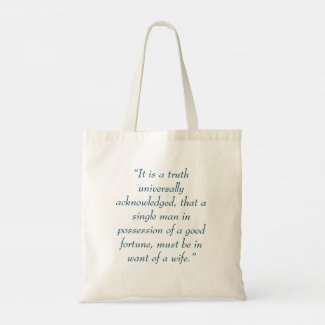
It is a truth universally acknowledged that the Austenian literary paradigm demands that the heroine get her man.

Pride and Prejudice  Tote Bag
Pride and Prejudice Tote Bag
by Totally_Jane_Austen

Bronte's bestseller 
"Reader, I married him," is among the most memorable lines in English literature. It's also one of the reasons why a lot more people reads Charlotte Bronte's Jane Eyre --  a story that has successfully been translated to the screen time and time again -- than her more mature novel, Villette. Ever see an adaptation of Villette? I haven't either.

Granted, Jane Eyre is a more likable heroine than Lucy Snowe. But the difference in endings and romantic resolutions are a key difference.  While Jane does get to decline a proposal, she also does get to marry her man on her own terms. In contrast, in Villette, the heroine only can picture her own reunion with her beloved professor that will not be realized.

I do recall one professor in graduate school considering that a triumph because she thought that actually having to live with M. Paul Emanuel would prove irritating. However, the tone is not one of "I dodged a bullet there," so much as "I'll have to make it on my own now. I will endure despite the loneliness."  That's not really what readers tend to expect in novels built on the framework of classic comedies.

Rooted in Shakespeare
If you've ever taken a Shakespeare class, you should already know that the definitive trait of comedy is not humor but a happy ending in which all the problems and threats are smoothed away, and society can function smoothly. As it says near the end of A Midsummer Night's Dream:  "Jack shall have Jill/ Nought shall go ill."

 Shakespeare always included a marriage or two on the horizon to point out that social harmony is indeed restored. In that way, it echoes the stereotypical fairy tale structure that ends with the prince and the princess marrying and assurance that they "lived happily ever after."

While there are novels that follow the plot  lines of classical tragedy, as we see in the works of Thomas Hardy, as well as novels that declare themselves free of heroes, as is the case of Vanity Fair,  the novels that fit the chick lit mold set by Jane Austen work out very much like Shakespeare's comedies. Stability is restored at the end, and the heroine is happily married.

The expectation was built up by the paradigm of novel forms that supplanted many others: the books written by Jane Austen. That was the model of women's writing pushed on Bronte. Though she rebelled in her own way by insisting on an vividly outspoken though plain-looking governess rather than a lady who never had to earn her living as her heroine, she did, ultimately conform to the marriage plot in Jane Eyre. 

Bronte's other two complete novels, The Professor and Shirley do have  marriages, though they are rarely included in  English literature courses. (Loads more than you probably wish to know about the complete Charlotte Bronte oeuvre in (En)gendering Romanticism: A Study of Charlotte Bronte's Novels ) By the time she got to Villette, she e felt confident enough to deviate from the formula, though the result is that a very fine novel gets far less name recognition and rates no box office appeal.

Little Women as Chick Lit
Now let's cross the Atlantic and jump ahead a bit in history to consider Louisa May Alcott's masterpiece, Little Women.  My alternative title for this blog was  "Why Louisa May Alcott's Heroine Could Not Remain a Literary Spinster."

As the latest adaption of the classic beloved by generations of girls sought to  highlight in its framing of the ending, the author did not intend to marry Jo off at all. (Read about that here: https://www.historyextra.com/period/victorian/history-little-women-louisa-may-alcott-writer-who-when-how-much-inspired-by-life/)  Despite reader pressure, she declared, I won’t marry Jo to Laurie to please anyone.”
https://upload.wikimedia.org/wikipedia/commons
/thumb/9/9c/Little_Women_-_frontispiece.png/


But her idea to leave her heroine as a "literary spinster" would not go over, and so she took perverse pleasure in marrying Jo off to “a funny match," the much older, somewhat stodgy Professor Friedrich Bhaer. (Though I haven't done real research into Alcott's reading, I find it hard to believe that the German Bhaer was not somewhat inspired by the professor figure in Bronte's works. )

Whatever you feel about the Laurie ship veering off course from Jo to Amy, which does come off as contrived, indeed, the potential resolution of leaving Jo as the solitary artist figure scribbling alone would have disappointed readers, likely made the book sell fewer copies, and certainly resulted in far fewer film adaptations.

Think of another heroine beloved by generations of young girls, Anne Shirley. While readers enjoy her continued adventures as a young single women, working as a teacher and earning her university degree, the expectation that she will end up with Gilbert Blythe is built in from the moment he says, "Carrots!' It can be delayed through several books, but it is, ultimately, inescapable for the books and the screen adaptions that have multiplied in recent years.

Exceptions do not disprove the general rule
That is not to say that no novels without marriage resolutions are adapted. Certainly some are, though not nearly with the same frequency as those that do feature the conventional happy ending.
Having the heroine remain single is not nearly as satisfying in terms of mass appeal.


The reader now may be bristling at the thought that we retain the same kind of conventional expectations even in modern times. Aren't we now enlightened enough to appreciate a story that does not end like a child's fairy tale? Yes, certainly, some of us are. But when success is measured in terms of pleasing the most possible people, you do need to stick to certain conventions.

Austen fans in a tizzy
This becomes clear in the reactions to the ending of the Sanditon series. If you look on IMDB, you'll see that while most episodes rate about an 8, some even close to 9. But the final episode only rates a 6.9 and includes some individual ratings as low as one from viewers who were bitterly disappointed in the ending. Here's a typical one star review:
If you are going to finish a Jane Austen story, please give it a Jane Austen ending! I have really enjoyed this series but the ending completely ruined it all. All I can think is they wanted to leave it open for series two? But why wreck a whole series in the hope to hook people to a second. The ending this story deserved would have made me watch a second, but this? Doubtful!
The argument is if you're going to bank on the Austen name to lure us in, you better deliver on the promised happy ending we've grown to expect from the completed six novels. Obviously, the producers of the series intended to not end the first season with the happily ever after for the heroine because there had been hopes of a second series, but that is not enough to assuage the outrage born of expectations unmet.

The pull of the marriage plot in a Jane Austen work  is simply too strong to be disregarded. Working against type here would leave your readership or audience is disconcerting as they feel cheated out of the social resolution  established in for the genre of comedy and the novel about women.


Related: 

Jane Austen: Love and Money
Love and Limerence in Jane Austen

Sunday, May 1, 2016

Living on 24 hours a day


Though the contexts may vary from those cloaked in spiritualism with suggestions of meals with a Buddah to those that guide you to a state of mindfulness, the essence of self-help books seems to be very much the same. 
And yet you are in search of happiness, are you not? Have you discovered it?
The chances are that you have not. The chances are that you have already come to believe that happiness is unattainable. But men have attained it. And they have attained it by realising that happiness does not spring from the procuring of physical or mental pleasure, but from the development of reason and the adjustment of conduct to principles.

That's what struck me when I read the really short book, How to Live on Twenty-Four Hours a Day by Arnold Bennett with a copyright date of 1910.  The author consciously references other book titles that say "How to live on X amount a day" to emphasize the point that time is money and even more precious and more evenly distributed than currency. I took a copy out from the library, but you can read the entire text online for free from the Gutenberg project here.
The book's central theme is maximizing one's time to achieve happiness, though not the happiness one pictures in a extroverted sense (see  http://uncommoncontent.blogspot.com/2013/08/happiness-is.html). The happiness is rather the result of achieving harmony between one's principles and one's actions. This point is revealed in chapter 8: 
We do not reflect. I mean that we do not reflect upon genuinely important things; upon the problem of our happiness, upon the main direction in which we are going, upon what life is giving to us, upon the share which reason has (or has not) in determining our actions, and upon the relation between our principles and our conduct.

The book is a 20th Century product, so it's no longer deferring to the Church for guidance on how to live. Rather it is exhorting one live according to principles and reason. In contrast to Disney's advice to follow your heart, you are advised to use your head. But in doing so you also gain an appreciation for science, art, music, literature (if those things interest you) or even your own daily life. What would be packaged today as "mindfulness," he calls reflecting on genuinely important things. 


Chapter 5 is entitled "Tennis and the Immortal Soul." The conjunction here is not intended to suggest a deep connection as one finds in  Zen and the Art of Motorcycle Maintenance. On the contrary, the suggestion is that tennis and other leisure pursuits are what people regard as important while they neglect the type of "cultivation of mind" that the author believes is essential to feed the soul. That becomes clear from the end of the chapter:
 But I do suggest that you might, for a commencement, employ an hour and a half every other evening in some important and consecutive cultivation of the mind. You will still be left with three evenings for friends, bridge, tennis, domestic scenes, odd reading, pipes, gardening, pottering, and prize competitions. You will still have the terrific wealth of forty-five hours between 2 p.m. Saturday and 10 a.m. Monday. If you persevere you will soon want to pass four evenings, and perhaps five, in some sustained endeavour to be genuinely alive. And you will fall out of that habit of muttering to yourself at 11.15 p.m., "Time to be thinking about going to bed." The man who begins to go to bed forty minutes before he opens his bedroom door is bored; that is to say, he is not living.But remember, at the start, those ninety nocturnal minutes thrice a week must be the most important minutes in the ten thousand and eighty. They must be sacred, quite as sacred as a dramatic rehearsal or a tennis match. Instead of saying, "Sorry I can't see you, old chap, but I have to run off to the tennis club," you must say, "...but I have to work." This, I admit, is intensely difficult to say. Tennis is so much more urgent than the immortal soul. 


I find it fascinating that the core of such advice is so consistent for over a century, despite the massive changes the world has seen over two World Wars and the rapid advance of technology. That is not to mitigate the differences in contexts. They are quite striking. Clearly, the people the book addresses are not feeling the same stress people do today when they rise early to commute to work and return from it. Work begins for them at 10 AM and ends at 6 PM. The commute is assumed to take at most half an hour, though there also is an assumption of a sixth half day of work ending at 2 PM.


For people living in England in 2010, leisure time is not frittered away in front of a screen (not even a movie screen, never mind a smartphone, computer, or television). Even a radio is out of the picture, as music is only to be found in live events. Still they manage to fritter away time but just by doing this and that until thinking of going to bed for a good 45 minutes before doing so. In that way, one lets time slip through one's fingers instead of getting one's real 24 hours' worth. In fact, the author doesn't expect one to use all 24 hours but just to make better use of the time spent outside work by exercising one's mind for 90 minute sessions and actively reflecting at other times when is apt to adopt a "semi-comatose" state.

Another difference most of today's self-help books and this one is that very little attention is paid to exercise of the body. Bennet does mention that 10 minutes a day of that can make a difference. However, he is not arguing that one needs to put in the time for the physical regimen but for exercising the mind and getting it into shape. Likely people walked a lot more just to get around as we're talking about a time before cars were owned by the average person.

Chapter 7 is entitled "Controlling the Mind," and like many modern books on meditation, the goal is to achieve concentration and focus, though Bennet skips the thinking about nothing step and jumps right into focusing on your end goal:
"What? I am to cultivate my mind in the street, on the platform, in the train, and in the crowded street again?" Precisely. Nothing simpler! No tools required! Not even a book. Nevertheless, the affair is not easy. When you leave your house, concentrate your mind on a subject (no matter what, to begin with). You will not have gone ten yards before your mind has skipped away under your very eyes and is larking round the corner with another subject. Bring it back by the scruff of the neck. Ere you have reached the station you will have brought it back about forty times. Do not despair. Continue. Keep it up. You will succeed. You cannot by any chance fail if you persevere.
When you achieve a certain mindset, you can appreciate that "nothing in life is humdrum" as stated by the title of Chapter 10. In that chapter Bennet demonstrates how an appreciation of cause and effect can make one more philosophical and less shocked when things don't go one's way with the example of accepting one's stolen watch as the result of knowable causes. But it's not just a matter of learning to appreciate human nature but all of nature:"The whole field of daily habit and scene is waiting to satisfy that curiosity which means life, and the satisfaction of which means an understanding heart." That is something that can even be appreciated by someone who does not care for art, music, or literature. But for those who do care for the latter, Bennet devotes an entire chapter.

"Serious Reading" is the title of Chapter 11. By using that term, Bennet's intention is to exclude novels because they do not require the mental exertion that should be applied to the 90 minute program. Good novels are all too easy to read, he says, and bad ones just aren't worth reading at all. It's remarkable that what was considered merely popular literature then are are now seriously studied in college courses. Wouldn't any reader today be proud for working her way through something like Anna Karenina if she were not required to read it for a class? Bennet has loftier reading goals, as he indicated by his own choice of reading, including the works of Marcus Aurelius (he doesn't leave home without him in book form), Epictetus, Pascal, La Bruyere, and Emerson. No women featured here, though he does reserve special praise for Elizabeth Barrett Browning and recommends that everyone read Aurora Leigh.


Aside from praising poetry over prose, Bennet offers two concrete suggestions for the one who embarks on improving reading:

The first is to define the direction and scope of your efforts. Choose a limited period, or a limited subject, or a single author. Say to yourself: "I will know something about the French Revolution, or the rise of railways, or the works of John Keats." And during a given period, to be settled beforehand, confine yourself to your choice. There is much pleasure to be derived from being a specialist.
The second suggestion is to think as well as to read. I know people who read and read, and for all the good it does them they might just as well cut bread-and-butter. They take to reading as better men take to drink. They fly through the shires of literature on a motor-car, their sole object being motion. They will tell you how many books they have read in a year. Unless you give at least forty-five minutes to careful, fatiguing reflection (it is an awful bore at first) upon what you are reading, your ninety minutes of a night are chiefly wasted. This means that your pace will be slow. Never mind. Forget the goal; think only of the surrounding country; and after a period, perhaps when you least expect it, you will suddenly find yourself in a lovely town on a hill.


Related post: http://uncommoncontent.blogspot.com/2013/11/its-meaningful-life.html
http://uncommoncontent.blogspot.com/2014/12/views-on-boundaries.html


I appreciate your attention and generosity. Tips accepted via Zelle.

If you enjoyed this content, you can support my work with a tip or purchase from my Zazzle store.

If you enjoyed this content, you can support my work with a tip or purchase from my Zazzle store.
Find great gifts and party accessories for literature lovers in all price points.