Showing posts with label fiction. Show all posts

Sunday, February 10, 2019

True love meets marketing

In email from Modcloth


from Banana Republic
When a holiday invented on a TV program becomes a real thing, we can only marvel at how right Oscar Wilde was in declaring, "Life imitates art far more than art imitates life."


Galentine's Day was born in a script for the 22nd episode of Parks and Recreation that first aired on NBC on February 11, 2010. In the episode named for the newly invented holiday, the holiday is presented not to supplant Valentine's Day but to offer a supplement to it. It sets aside February 13th as the day to celebrate women's friendship,with gifts and gatherings.

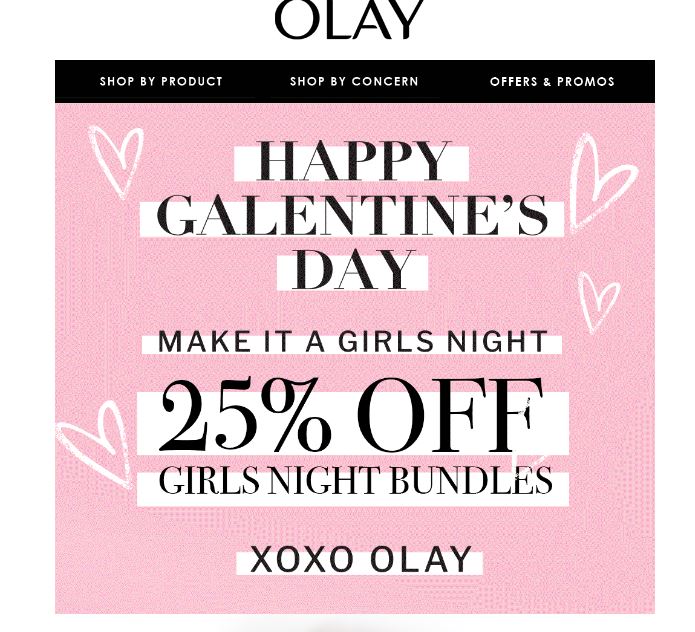


As someone who has never watched the program, I had not heard of Galentine's Day until a couple of years ago when businesses started to latch on to the day as cause for marketing clothes, cosmetics, brunches, etc. In fact, this year, I already received emails from the likes of Target, ModCloth, Gap brands and Olay with messages like the ones I copied here.

Clearly, marketers know an opportunity when they see it (even if some publications on marketing have failed to take note) and by 2019 Galentine's Day is a marketing holiday in its own right. Granted, Galentine's Day has not yet made it to the status of being counted among the holidays covered by National Retail Foundation (NRF). However, the force behind the Galentine's Day movement is a factor in the revision of Valentine's Day itself.

 The Evolution of Valentine's Day 

A 2013 article entitled "The Reconceptualization of Valentine’s Day in the United States: Valentine’s Day as a Phenomenon of Popular Culture"argues that the holiday was reborn in the US in 1840s, largely due to the rise of marketing, which extended the celebration through the promotion of gifts and cards: " Even though the holiday historically involved primarily young men and women, the range of individuals included in the celebration of Valentine’s Day was expanded in the United States to any and all ages through aggressive marketing techniques directed at both the young and old, consequently increasing the amount of Valentine’s Day consumers."

Certainly, there is no let up of marketing around such a lucrative holiday. This year, the NRF estimates a record-breaking  $20.7 billion will be spent on Valentine's Day, and that's even in the case of just 51 percent of people saying this will be celebrating it. That's because those who are spending are spending more, and not just on the red roses and romantic dinners. Cards and gifts for friends and indulgences one buys for oneself are propping up those spending amounts. As the NRF itself observes, the spending patterns for Valentine's Day have changed over the past decade.

The Galentine's Day Factor and Modern Princesses

The change noted by NRF fits well with the timing of the rising influence of the Galentin'se Day Phenomenon over that same period of time. Even for those who do not set aside February 13th as the day to mark the value of female friendships, the attention it -- among other key relationships outside romantic ones -- deserve has taken over a greater share of Valentine's Day itself. For an easily accessible barometer of pop culture, we'll look at the evolution of  Disney movie plots.

The cultural shift in celebrating various loves in life can even be seen in Disney movies of this period. While the classic princess stories, starting with the 1937 Snow White,  had always culminated in finding her prince, that has also evolved. Let's look at 2010: in Tangled, Rapunzel does meet a man she falls for her, he is not a prince, and they do not even commit to marry by the end of the film. So there is some deviation from the classic romantic plot there. By 2012, there is no romantic interest interest offered at all for the heroine of Brave who is motivated by her love for her family. But the really big change arrives the following year in Frozen in which the trappings of romantic love are presented only to be rejected, and the transformative power of true love is shown to be the bond of sisters.

True love, no longer the province of a  princess bride now can be taken to apply to friends and family, and so Valentine's Day itself is being redefined as a holiday of love that is not bounded by romantic tropes. Of course, marketing will take advantage, and we even have sellers who can take advantage of those whose spending is devoted to "anti-Valentine's Day" gifts.

Tuesday, June 17, 2014

Telling a story through letters and posts

Don Quixote is the work that many identify as the first modern novel, a work distinct from epic romances or other high-brow treatments of fictions that were considered worthy of poetry rather than prose.  Of course, that was not an English work, but a Spanish one. The novel genre only arrived in England nearly 2 centuries later, and often the stories were told in the form of letters. 
  
Epistolary novels are set on the premise of the narrator, telling the story to a correspondent. Samuel Richardson opted for the epistolary form for both Pamela and Clarissa in the 1740s About a half a century later, Jane Austen used that form in Lady Susan.  Some decade or two afterwards, Mary Shelley framed the story of the archetypal mad scientist, Frankenstein, in her novel of the same name by having the story related by the sailor who picks him up on his sea voyage in letters to his sister. However, as the novel gener took off during the 1800s, most dropped the epistolary device, even if they were written in first-person. 

It hasn't disappeared altogether, though, modern treatments tend to mix the letters with narrative, often from different points of view, as in  The Guernsey Literary and Potato Peel Pie Society Some contemporary novels substitute emails for letters and sometimes also throw in texts or social media style updates in telling their stories. I wouldn't be surprised if there is a novel that is relayed solely through tweets, possibly grouped under hashtags rather than traditional chapter titles. 


But I wonder if anyone has attempted to tell a story through an online community bulletin board. I know that some reveal an awful lot about their lives through their posts -- about having children, having financial difficulties, attempts at getting a job, attempts at getting a loan, divorce, and calls for outright handouts.  That's all from one person's posts over the past 3 or 4 years. For writers of fiction, I thought that such an account could  form the central line of a narrative from which several key characters branch off. 


Related interest:
http://uncommoncontent.blogspot.com/2013/06/jane-austens-heroines-from-extroverted.html
http://uncommoncontent.blogspot.com/2014/02/poetry-difference-between-practice-and.html


Saturday, March 9, 2013

The most memorable part of a book


I usually remember quite a bit from books I've read even years later. Sometimes I may forget the title and start reading a book only to realize I have read it before once I get to a more distinctive section. Then I will only read it again if it really has something going for it. Classic works, on the other hand, I do remember reading and reread deliberately.

It gave me a strange feeling, though, when I realized that the book I read in under 4 hours was one I had read back in my teen years. I remembered absolutely nothing about the plot or even the characters. But I did remember the pearl necklace. In Anna and Her Daughters ( in which the good are rewarded as Wilde's Miss Prism asserts is the meaning of fiction)  the narrator/heroine is given a very valuable pearl necklace to wear from the woman she works for. The woman explains that she had the wrong kind of skin for it, which caused the pearls to get discolored. Locking them up did not improve their conditions either. The young heroine agrees to wear them, and the pearls return to their original luster. The woman then tells her to keep them.

I read this 1958 book many decades after it was published, though quite a few years before Google, so I never looked into the question of curing sick pearls, as they are described in this book.  Even with Google, I haven't been able to find much about it beyond an eHow piece that says dry conditions can cause pearls to turn yellow and that agrees with what the novel claims that pearls need to be worn to retain their luster. There is a comment on that article that gets rather scientific in describing what causes the discoloration and insisting that it can't be reversed:

There is no scientific evidence to back up the claim that wearing pearls will prevent them from turning yellow. Pearls turn yellow because they are made of an unstable substance called aragonite which due to the immutable laws of chemical science will eventually crystalize into calcite which is a more stable structure of calcium carbonate. Both substances are forms of calcium carbonate. Once this has happened the pearls turn yellow and nothing can reverse it. Oils in your skin cannot keep this from occurring, and there is no scientific evidence or even scientific conjecture to back up this idea. ''Drying out''from air tight storage might cause the nacre to peel but drying out does not hasten the process from aragonite to calcite which causes pearls to yellow. That process is hastened by moisture and heat.

The eHow articles that give tips on cleaning pearls also warn not to soak them because they will absorb the moisture and become soft. Sevenson's heroine, though, makes a special trip to the seaside to place the pearls in saltwater, as she has been told that will improve them. And the book that, in combination with her daily wearing, reverses the discoloration altogether.


On this reading, I realized that the author intends the pearls to function as a kind of symbol without having to make it explicit. It still strikes me, though, that the image of the sick pearls being cured by being worn as they should really stuck in my head for a couple of decades when nothing else in the book did. 

Though I do tend to remember whodunit in mysteries, for other novels, concretely rendered images in books are much more memorable than plots. 

I appreciate your attention and generosity. Tips accepted via Zelle.

If you enjoyed this content, you can support my work with a tip or purchase from my Zazzle store.

If you enjoyed this content, you can support my work with a tip or purchase from my Zazzle store.
Find great gifts and party accessories for literature lovers in all price points.