Showing posts with label Emma. Show all posts

Tuesday, June 16, 2026

Valuing kindness above cleverness: Emma's lesson


This blanket is one of the hundreds of themed  products available at Totally_Jane_Austen 


New Yorker cartoon: "Son, if you can't say something nice, say something clever and devastating."

Facebook brought this New Yorker cartoon into my feed. I immediately thought of Jane Austen's Emma. She thought the same way the father in this cartoon does that saying something clever but devastating is an irresistible temptation, but she comes to regret the hurt she has caused. 


While the group is seated for their picnic, Frank Churchill stirs things up by declaring a demand from Miss Woodhouse: 

" 'she only demands from each of you either one thing very clever, be it prose or verse, original or repeated--or two things moderately clever--or three things very dull indeed, and she engages to laugh heartily at them all."

"Oh! very well," exclaimed Miss Bates, "then I need not be uneasy. 'Three things very dull indeed.' That will just do for me, you know. I shall be sure to say three dull things as soon as ever I open my mouth, shan't I? (looking round with the most good-humoured dependence on every body's assent)--Do not you all think I shall?"

Emma could not resist.

"Ah! ma'am, but there may be a difficulty. Pardon me--but you will be limited as to number--only three at once."

Miss Bates, deceived by the mock ceremony of her manner, did not immediately catch her meaning; but, when it burst on her, it could not anger, though a slight blush shewed that it could pain her.

"Ah!--well--to be sure. Yes, I see what she means, (turning to Mr. Knightley,) and I will try to hold my tongue. I must make myself very disagreeable, or she would not have said such a thing to an old friend."

Silver Emma quote pendant  

There is some additional dialog and a bit of narrative until Mr. Knightley is able to confront Emma alone and take her to task:

While waiting for the carriage, she found Mr. Knightley by her side. He looked around, as if to see that no one were near, and then said,

"Emma, I must once more speak to you as I have been used to do: a privilege rather endured than allowed, perhaps, but I must still use it. I cannot see you acting wrong, without a remonstrance. How could you be so unfeeling to Miss Bates? How could you be so insolent in your wit to a woman of her character, age, and situation?--Emma, I had not thought it possible."

Emma recollected, blushed, was sorry, but tried to laugh it off.

"Nay, how could I help saying what I did?--Nobody could have helped it. It was not so very bad. I dare say she did not understand me."

"I assure you she did. She felt your full meaning. She has talked of it since. I wish you could have heard how she talked of it--with what candour and generosity. I wish you could have heard her honouring your forbearance, in being able to pay her such attentions, as she was for ever receiving from yourself and your father, when her society must be so irksome."

"Oh!" cried Emma, "I know there is not a better creature in the world: but you must allow, that what is good and what is ridiculous are most unfortunately blended in her."

"They are blended," said he, "I acknowledge; and, were she prosperous, I could allow much for the occasional prevalence of the ridiculous over the good. Were she a woman of fortune, I would leave every harmless absurdity to take its chance, I would not quarrel with you for any liberties of manner. Were she your equal in situation--but, Emma, consider how far this is from being the case. She is poor; she has sunk from the comforts she was born to; and, if she live to old age, must probably sink more. Her situation should secure your compassion. It was badly done, indeed! You, whom she had known from an infant, whom she had seen grow up from a period when her notice was an honour, to have you now, in thoughtless spirits, and the pride of the moment, laugh at her, humble her--and before her niece, too--and before others, many of whom (certainly some,) would be entirely guided by your treatment of her.--This is not pleasant to you, Emma--and it is very far from pleasant to me; but I must, I will,--I will tell you truths while I can; satisfied with proving myself your friend by very faithful counsel, and trusting that you will some time or other do me greater justice than you can do now."

You can judge for yourself which adaption of the picnic at Box Hill, showed this lesson best, thanks to the compilation here:


With great status comes great responsibility 

The first line of Emma is not nearly as famous as the opening line of Pride and Prejudice, though it also archly conveys the essence of the story: "Emma Woodhouse, handsome, clever, and rich, with a comfortable home and happy disposition, seemed to unite some of the best blessings of existence; and had lived nearly twenty-one years in the world with very little to distress or vex her."

Emma seems to have all that is necessary for happiness. Out of those three attributes, she takes the most pride in her cleverness, taking her wealth for granted and lacking vanity for her appearance, as Mr. Knightley reveals in conversation with Mrs. Weston. 


Like a tragic hero, Emma's great strengths are also what lead to her undoing -- or rather some misjudgments and hurt feelings that the good-hearted Emma never intended. Austen's novels follow the conventions of Shakespeare's comedies rather than the tragedies, so everything works out fine in the end with the main characters properly paired off. 

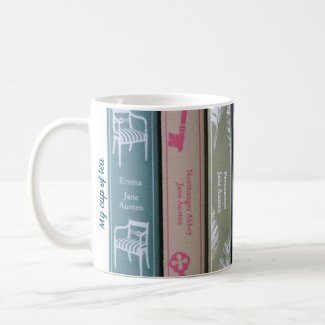
Jane Austen Mugs
Jane Austen Mugs
by Totally_Jane_Austen
However, along the way, our heroine has to admit her faults and mistakes and learn to be better, which she does. Now that I think about it, Emma's lesson is similar to Darcy's who responded to Bingley's suggestion that he ask Elizabeth to dance with "She is tolerable; but not handsome enough to tempt me; and I am in no humour at present to give consequence to young ladies who are slighted by other men."

 Darcy came to regret that quip as much as Emma regretted what she said to Miss Bates. Like Darcy, Emma learns that kindness and consideration for the feelings of others is a greater measure of worth than attempt to manipulate others -- for their own good -- and clever remarks.  

P.S. The value of kindness is one of the Austen themes that The Other Bennet Sister gets right. Mrs. Bennet's lack of kindness to her middle daughter destroys her self-esteem. Her mother's foil is her Aunt Gardiner who is kindness herself. Mary also comments on feeling really bad about having to refuse to dance again with Mr. Sparrow whose only fault was having been kind to her and describes Tom Hayward as "the kindest man."  


Related:


Thursday, November 27, 2025

The Familiar Suitor Problem in Jane Austen's Novels


Pride and Prejudice & Sense and Sensibility Desk Organizer


"You will meet a tall, handsome stranger." That fortuneteller style promise is what many consider the epitome of romance. You meet a stranger, your eyes lock, and you take a fatal hit from Cupid's bow. Popular films and paperback novels have made that standard.

Stranger danger and fascination

In Jane Austen's novels, things work a little differently, though she does also play with the fascination people, especially romantically inclined young women, have with the attractive outsider.  If familiarity breeds contempt, than its opposite breeds fascination. As the person is not a fully known quantity like the members of the "four and twenty" families one may dine with regularly in the country, there is the introduction of a spark of intrigue in getting to learn more about them and what their lives consist of elsewhere. 

The mystery of their lives may also include a scandal or even a crime, which Catherine Moreland considers in her flights of fancy. But that hint of danger can add an extra frisson that a heroine may find attractive as we see in Marianne's response to Willoughby. Emma, on the other hand, decides to have a kind of controlled crush when Frank Churchill enters the  picture and engages in a flirtation with her to conceal the fact that he has entered into a secret engagement.

Breaking out of the friend zone

Of course, Emma ends up not marrying a stranger at all but her brother-in-law, who has been a regular in her house for years. In fact, making that transition from from the brotherly relationship one has in the friend zone to romantic interest is a challenge for both the hero and heroine of Emma, as it is for Mansfield Park. 

In the first chapter of Mansfield Park, the general rule that boys and girls who grow up in proximity to each other like brother and sister are much less likely to be attracted to each other than they would be if they meet as grownup strangers is explained by Mrs. Norris when prevailing on Sir Thomas to give a home to Fanny price: 


You are thinking of your sons—but do not you know that, of all things upon earth, 
that is the least likely to happen, brought up as they would be, always together like brothers and sisters? It is morally impossible. I never knew an instance of it. It is, in fact, the only sure way of providing against the connexion. Suppose her a pretty girl, and seen by Tom or Edmund for the first time seven years hence, and I dare say there would be mischief. The very idea of her having been suffered to grow up at a distance from us all in poverty and neglect, would be enough to make either of the dear, sweet-tempered boys in love with her. But breed her up with them from this time, and suppose her even to have the beauty of an angel, and she will never be more to either than a sister.

Mrs. Norris is mostly correct. Edmund does seem to regard Fanny as another sister but not as anything more than that. It takes some revelations about the moral failings of the strangers who bring down his actual sister to make him realize that the steadfast Fanny will serve him better than the attractive and sparkling Mary Crawford.

In Emma, Mr. Knightley never makes the mistake of falling for anyone other than Emma (at least as far as we see in the novel). However, it takes Emma's fear that it might happen -- when Harriet admits to being in love with him --  to jolt her into acknowledging how she really feels about Mr. Knightley (chapter 47). 

A mind like hers, once opening to suspicion, made rapid progress; she touched, she admitted, she acknowledged the whole truth. Why was it so much worse that Harriet should be in love with Mr. Knightley than with Frank Churchill? Why was the evil so dreadfully increased by Harriet’s having some hope of a return? It darted through her with the speed of an arrow that Mr. Knightley must marry no one but herself!

Emma tote bag

Here Cupid's arrow finally marks Emma but only many years after she first met Mr. Knightley. This is a love born of a spark maintained over time rather than a burst of flame that strikes all at once. And there's the rub because the pattern of their relationship has been set as brother and sister for so long. In fact, the dialog brings that up when they dance 10 chapters earlier in the book:

'Whom are you going to dance with?' asked Mr. Knightley.
She hesitated a moment, and then replied, 'With you, if you will ask me.'

'Will you?' said he, offering his hand.

'Indeed I will. You have shown that you can dance, and you know we are not really so much brother and sister as to make it at all improper.'
'Brother and sister! no, indeed.'


So they established that there is no fear of regarding their relationship as incestuous. But there is still the obstacle of breaking out of the friend zone, which Mr. Knightley grapples with just before he declares himself in chapter 49. Emma had just stopped Mr. Knightley from speaking because she really fears he will confess his love for Harriet. Then she realizes that he was pained by her response and lets him know she will listen:

'I stopped you ungraciously, just now, Mr. Knightley, and, I am afraid, gave you pain. But if you have any wish to speak openly to me as a friend, or to ask my opinion of any thing that you may have in contemplation -- as a friend, indeed, you may command me. I will hear whatever you like. I will tell you exactly what I think.'

'As a friend!' repeated Mr. Knightley. 'Emma, that I fear is a word -- No, I have no wish -- Stay, yes, why should I hesitate? I have gone too far already for concealment. Emma, I accept your offer, extraordinary as it may seem, I accept it, and refer myself to you as a friend. Tell me, then, have I no chance of ever succeeding?'
Watch on Totally Jane Austen

He then communicates even without words, and Emma finds herself speechless, and that leads to the most romantic line in this book, "If I loved you less, I might be able to talk about it more."

Yet they dream of Darcy

Yet women still tend to swoon far more over Darcy -- the outsider hero -- than they do over Mr. Knightley -- the familiar suitor.  There are also far more film and television adaptions of Pride and Prejudice than there are of Emma. That would indicate that  while Jane Austen was able to center a romantic novel around the more modern type of relationship that bring together two equals who marry their best friends, people still fall for the fairytale plot of the outsider coming in and rescuing the heroine to earn her love.

First line of Jane Austen's Novels Mug

Related

Jane Austen at 250

Observations on Jane Austen's Emma

Valuing Kindness Over Cleverness                                Jane Austen: Love and Money                              

Love and Limerence in Jane Austen
Jane Austen at the Morgan

Jane Austen and Autism

Jane Austen's Heroines

Pride, Prejudice and Persuasion: Obstacles to Happiness 

Three Janes, Two Governesses, and the Abolitionist Movement


Monday, June 28, 2021

Love and Limerence in Jane Austen


watches and jewelry collection

Emma quote matches in the Emma collection


"Men of sense do not want silly wives," Mr. Knightley tells Emma.


In context, the infallible Mr. Knightley is correct. Yet Emma is not wrong in her understanding that many men look only for beauty and agreeableness, qualities Harriet Smith certainly possesses.

Jane Austen's novels offer abundant proof of Emma's assumption holding true. One of them appears in Sense and Sensibility in the narrator's explanation of how Mr. Palmer' ended up with the irritatingly silly Charlotte: "through some unaccountable bias in favour of beauty, he was the husband of a very silly woman" He fell into the same trap that Mr. Bennet fell into and deals it in the same way -- by ignoring his wife as much as possible.

So what drives men of sense to marry silly wives? Or in the case of Mansfield Park, the question may be why do they marry women they are not fit for, as in the disastrous marriage of Mr. Rushworth to Maria Bertram? It's the same thing that drives women of virtue to fall for cads like Wickham, Willoughby.


Chemical reactions


They are taken in by good looks and a flirtatious charm. The response to that arouses sexual attraction, and that chemical reaction is what makes them fall into limerence. The term limerence was not around in Jane Austen's day, though she certainly showed understanding of what it was and how it alone was not a sufficient basis for a solid marriage.


John Gottman refers to limerence in several books and articles. To see it in brief, visit, Gottman 3 phases of love: " In 1979, Dorothy Tennov coined the term 'limerence' for the first stage of love, characterized by physical symptoms (flushing, trembling, palpitations), excitement, intrusive thinking, obsession, fantasy, sexual excitement, and the fear of rejection."


This, Gottman identifies as the "falling in love" stage of love. That is when one is convinced that they've found "the one" who is peerless and faultless. We see this in Marianne's instant attachment to Willoughby and her priding herself on not being constrained by conventional expectations for relationships because she believes her strong feelings equal complete knowledge of the other (Sense and Sensibility Ch. 12).


"You are mistaken, Elinor," said she warmly, "in supposing I know very little of Willoughby. I have not known him long indeed, but I am much better acquainted with him, than I am with any other creature in the world, except yourself and mama. It is not time or opportunity that is to determine intimacy;-- it is disposition alone. Seven years would be insufficient to make some people acquainted with each other, and seven days are more than enough for others.... of Willoughby my judgment has long been formed."

What accounts for this throwing all caution to the wind and believing only the best of the person one is attracted to is literally chemistry. Gottman cites Dr. Theresa Crenshaw’s book The Alchemy of Love and Lust, about what it takes to "set off the cascade of hormones and neurotransmitters that accompanies the exciting first phase of love."


Incidentally, for all those who think it's all about how a person looks, that's wrong. Appearances alone -- certainly when they are reduced to two dimension on a screen -- can never set off the potent mix of chemical involved in the feeling of attraction. It's not just looks but also how they physically fit, even how they smell.


Gottman lists some of the chemicals that send these limerence signals:

Phenyleteylamine (PEA) is a natural form of amphetamine our bodies produce and has been called “the molecule of love.”
Pheromones, produced from DHEA, influence sensuality rather than sexuality, creating an inexplicable sense of well-being and comfort.
Ocytocin has been called “the cuddle hormone.” It compels us to get close, and when we are feeling close (to anyone) we secrete it. It is secreted by the posterior pituitary gland, and stimulates the secretion of dopamine, estrogen, LHRH, and vasopressin.


We see exactly this experience happening for Marianne in her relationship with Willoughby. While we don't see it happening in the same way, Sense and Sensibility has Edward Ferrars relate that he had fallen into limerence when he became engaged to Lucy Steele. The feelings that overwhelm the person falling in love are "generally accompanied by poor judgment, so that people will ignore the red flags that they will inevitably confront," as Gottman puts it.

Necklace available here 

Chemistry alone doesn't cut it


However, Edward wakes up from his infatuation with Lucy after he meets Elinor and starts to realize that there really was nothing there for him besides the superficial attraction. He was attracted-- not unlike Mr. Palmer -- to a woman with some prettiness who knew enough to gain a man's interest. But over four years and seeing another woman who is so much her superior, Edward falls out of limerence and only keeps up the engagement out of a deep sense of honor (watch for another blog on that).

A Good Housekeeping article on romantic chemistry quotes Carrie Cole, M.Ed., L.P.C., research director and Gottman Master Trainer at The Gottman Institute. “Chemistry opens the door, but it’s what we do with it afterwards that determines whether the relationship will have any legs.” She goes on to explain, “chemistry and compatibility are two different things, and sometimes the people we feel an overwhelming attraction to are not right for us long-term."

The bad marriages we see in Austen and in real life are due to those people allowing themselves to marry the person they feel attracted to without thinking beyond that. Cole's quote applies perfectly to the Bennet's, Edward's mistake in Lucy Steele, and the mistake that Edmund Bertram makes about Mary Crawford:

"People can get into trouble by rushing to commit to someone when they prioritize chemistry over shared interests and values.”

Signs of true love as a basis for marriage


Austen is aware of the headiness of limerence and how it is what stirs some people to select someone that may not be approved of by others, though it can be the right choice. That's the story in Persuasion. Anne picked the right man in Frederick Wentworth but was warned off because lady Russel thought it was just an infatuation. Darcy picked the right woman in Elizabeth, but he had to realize that she was right not just because he is infatuated with her but because she is the choice of reason, as well as feeling.

Darcy wins Elizabeth in the same way that Col. Brandon wins Marianne -- not by arousing limerence but in jumping right to the second phase of love that Gottman identifies as building trust. When one can answer yes to the big questions like “Will you be there for me? Can I trust you?" you get a a strong foundation for a relationship.

Arriving at the yes there is not easy. That's why, Gottman explains, "Love in Phase 2 becomes punctuated by frustration, exasperation, disappointment, sadness." Elizabeth experiences that, as does Anne Elliot, Elinor Dashwood, and Fanny Price.


Building Commitment and Loyalty

Commitment and loyalty are the characteristics of  what Gottman identifies as the third phase of love. All of Austen's heroines get that with their choice of husbands. One of the important points that both Austen and Gottman make about keeping that relationship healthy is focusing on the positive rather than the hurt that one had experienced before. The difference between successful and unsuccessful relationships can  hinge on whether they opt for "cherishing one another and nurturing gratitude for what they have with their partner, or" choose to dwell on :resentment for what they think is missing."

Elizabeth laughs this off as having a poor memory, while Anne makes a point of having Wentworth see things from her point of view. He does and then admits his own blame in not having come back for her sooner out of a sense of pride (see Pride, Prejudice and Persuasion: Obstacles to Happiness in Jane Austen's Novels)


And it is very clear that Col. Brandon never blames Marianne for having preferred Willoughby to him, and their marriage is not about settling on her part but about her realizing that the final stages phase of love matter more than feeling swept off one's feet by limerence.




Friday, June 18, 2021

Jane Austen at the Morgan

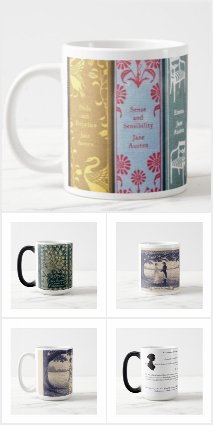
Jane Austen novels are my cup of tea
by Totally_Jane_Austen
From November 2009 to March 2010, there was a special exhibit of Jane Austen writings at the Morgan Library & Museum called A Woman's Wit: Jane Austen's Life and Legacy.

The Morgan itself owns the largest collection of Jane Austen letters in the world. Unfortunately, her sister burned most of them, so the relatively few that remain are treasures, indeed. The letters show that Austen, like Jane Fairfax in Emma used cross-writing to save paper. If you view the digitized version on the site, you can zoom in to decipher one of her letters for yourself. 
The detailed description on the letter says: 
 

Writing over the course of three days, Austen acknowledges receiving another letter from Cassandra in the meantime: "You are very amiable & very clever to write such long Letters; every page of yours has more lines than this, & every line more words than the average of mine. I am quite ashamed—but you have certainly more little events than we have." The letter is full of little events: "Mr Waller is dead, I see;—I cannot grieve about it, nor perhaps can his Widow very much," and "I want to hear of your gathering Strawberries, we have had them three times here." She reports that she is not enjoying Walter Scott's newest creation Marmion, an epic poem about a sixteenth-century battle between the English and the Scots, although she suspects she should be.


I do consider these letters a wonderful image for Austen's novels and her characters. The first read reveals something, but it takes another read from another angle to get a deeper understanding about the heart of the matter. In Persuasion, for example, Anne Elliot finds her cousin to be all that is sensible, amiable, and charming but has her friend's revelation about his ruthless selfishness assure her that he was dissembling all along. The reverse is true of Mr. Darcy, who makes a terrible first impression but later proves himself -- in a letter, no less -- to be the very best of men.

The Morgan has also fully digitized its hand-written copy of Lady Susan, and you can feast your eyes on all 161 pages: https://www.themorgan.org/sites/default/files/pdf/facsimile/AustenMA1226.pdfread  
It is really a wonderful experience to see the author's own handwriting, and it's  fully legible without any cross-writing challenges. Back in the day when I  had to look up an Oscar Wilde typescript for an assignment, I had to go to the library and handle it with gloves. Now one can just summon a manuscript at home on demand. 


Channeling Jane Austen pen


Related posts: 


Thursday, June 17, 2021

Three Janes, Two Governesses, and the Abolition Movement


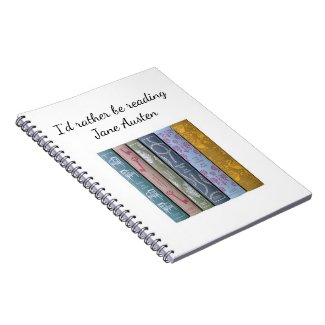
I'd rather be reading Jane Austen  Notebook
 from the Studying with Jane Austen Collection


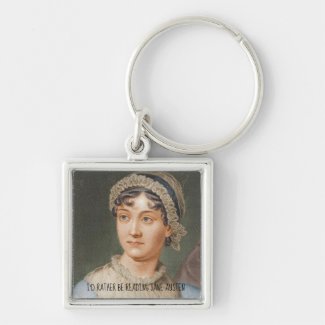
Button Keychain
_Jane_Austen keychain collection

With Juneteenth just two days away, I thought it a good time to mention something many people miss in Emma -- an allusion to slavery that was still in practice at the time. 

In Emma, Jane Austen created a perfect little village where the worst people achieve no more than mean girl tricks and putdowns. The Eltons feel superior when putting down Harriet Smith, and Emma proves her worth by feeling bad about her witticism at Miss Bates' expense. While a threateningly powerful figure looms large in the novel -- Mrs. Churchill -- she remains off-stage, where she also conveniently died.

Outside polite society

One thing that is even further off-stage in the novel is slavery, both the kind that was illegal in England and the kind that was legal with low wages thrown in. Mansfield Park is the novel that critics have identified as linked to slavery because the master of the estate in the title relies on income generated by slave labor in Antigua and  leaves his home for an extended time to tend to his plantations.

But it is in Emma that it comes up more explicitly to illustrate a character's proof grasp on imagery. This happens in chapter 17 when Mrs. Elton insists on pushing Jane into a governess position sooner rather than later. (Note how close to Dickensian Austen gets in naming the person referred to Suckling.) Jane tries to politely decline Mrs. Elton's interference and tells her:

   "When I am quite determined as to the time, I am not at all afraid of being long unemployed. There are places in town, offices, where inquiry would soon produce something—Offices for the sale—not quite of human flesh—but of human intellect.”

Jane Austen Stickers, Seals, and Gift Tags

Jane Austen Stickers, Seals, and Gift Tags
by Totally_Jane_Austen
Mrs. Elton mistake of Jane Fairfax's meaning, as is clear from her response:

“Oh! my dear, human flesh! You quite shock me; if you mean a fling at the slave-trade, I assure you Mr. Suckling was always rather a friend to the abolition.”

“I did not mean, I was not thinking of the slave-trade,” replied Jane; “governess-trade, I assure you, was all that I had in view; widely different certainly as to the guilt of those who carry it on; but as to the greater misery of the victims, I do not know where it lies. But I only mean to say that there are advertising offices, and that by applying to them I should have no doubt of very soon meeting with something that would do.”


Mrs. Elton only hears of slavery and immediately makes a point of establishing the family she had in mind as allied with the abolitionist movement. However, what Jane was thinking about was what in Marxist terms would be called "wage-slavery." 

A governess would not be working for free, though she'd be working for very little. The main thing, though is that she'd have a master/mistress who is in control of her time.


Like a servant, the governess has to live with the household and move with them or stay behind as they bid. Unlike the other servants, though, she is hired for what we would call white-collar (or perhaps pink-collar) work rather than manual labor. As a result, the governess is neither fish nor fowl as she occupies a shadowy space between the gentry who employ her and the rest of the staff.

This is the uncomfortable position that Jane Fairfax is loath to accept. She is, at this point, secretly engaged to Frank Churchill and so can become a gentleman's wife instead of a paid laborer, so long as the timing works out (which it does, as this is a novel with a happy ending for all).


From Jane Fairfax to Jane Eyre

It's clear that Charlotte Bronte read Jane Austen. After all, George Lewes was constantly advising her to follow in her literary footsteps. Bronte had her own ideas, however. She declared, "I should hardly like to live with her ladies and gentlemen in their elegant but confined houses" yet one wonders if she somehow absorbed the character of Jane Fairfax and gave her first name to her most famous heroine -- Jane Eyre -- and her last name to the housekeeper at Thornton Hall. 

I will have to restrain myself back from going on about Jane Eyre whose book makes up a whole chapter in my dissertation. Feel free to download it and read at your leisure. Like Jane Fairfax, Jane Eyre was born into the gentry class but was orphaned and impoverished and then sent to live with a wealthier family. From that point, though, their histories diverge.

Fairfax got on very well with the rich daughter of the house and remained her companion until she married. In contrast, Eyre, was bullied and even abused by her rich relatives and sent away to a charity school that also abused her. Coming out of that, a governess position was a step up, and still got her happily ever after.  

But for Fairfax, who had already met the man she loves and was just waiting to become Mrs. Churchill once the tyrannical woman who currently holds the title dies, a governess position was a serious step down. That is why she only accepts the position after a fallout with Churchill and is quite happy to let it go. She has no need to reach financial independence to feel equal to him. 

But Bronte's heroine takes pride in holding her position. She admits to being subject to the master's orders because he pays her but still insists that they are equals. Bronte saw dignity in a woman using her education for her work, and that is something that informs her heroine's character and her deciding that a woman like that -- rather than the beautiful and rich Emma -- deserves to tell her own story. 


Wednesday, June 16, 2021

Observations on Jane Austen's Emma

https://www.zazzle.com/emma_attitude_tote_bag-256267218524280463
Emma collection tote bag 


I  recently reread Emma recently and was struck by a number of themes (including one surprise mention of slavery that I'll put in another post) and structural parallels. 


The right thing to do is the kind thing

Emma is redeemable for all her faults because she has a kind heart. Her father does, as well, though it manifests itself in fussing about warmth, food, calling in the doctor, etc. We see this clearly in the novel when he sends the pig portion to the Bates household, and Emma orders it to be an even more generous cut.


They have consideration for their servants, as does Mr. Knightley. It's clear that -- in contrast to Mrs. Elton -- he knows their names and tries to minimize their trouble. Part of the reason why he insists on the meal being served in the home rather than outside when he allows visitors to pick the estate's strawberries is because that makes things easier for the servants.

Mr. Knightley's expression of love watch


Mr. Knight only takes a carriage to the dance in order to be able to bring in Miss Bates and Jane. He does things in a quiet way. Also important to note that in the novel it is made clear that he doesn’t normally dance, so his dancing with Harriet after she is snubbed by Elton becomes even more significant. 


The novels also shows examples of false kindness. They include Mrs. Elton pressing Jane into a governess job she doesn’t want, Emma pushing Harriet to aspire higher than Robert Martin, and Frank Churchill gifting Jane with a piano with no notice, giving rise to all kinds of speculation.


Mentorship

Mr. Knightley mentors Robert Martin purely to be helpful. He also serves as a mentor to Emma. His goal is 
to make her the best person she can be and recognize her duty in her society where she is the 19th century equivalent of an influencer.

On the other hand,  Emma mentors Harriet Smith with mixed motives and questionable guidance at times. But she is not as self-serving as Augusta Elton who takes on Jane Fairfax to enhance her view of herself as helpful when she is wholly bossy and manipulative.

Mr. Knightly brings out the best Emma. His love for her doesn't blind him to her faults (in contrast to Emma's sister who is always blind to the faults of those she loves). Mrs. Elton brings out her husband’s mean side and encourages it, pushing him on to humiliate Harriet by refusing to dance with her. In contrast, as Mr. Knightly suggests, Jane Fairfax will be a positive influence on Frank Churchill.


Be sure to check out more merch at Totally_Jane_Austen!

Related posts


Valuing kindness above cleverness: Emma's lessonThree Janes, Two Governesses, and the Abolitionist Movement
Jane Austen and Autism

Wednesday, June 5, 2013

Jane Austen's Heroines: Ranging from Extroverted Emma to Introverted Fanny

                               Jane Austen Fiber Doormat


If I were to rank Jane Austen’s heroines on a scale of most extroverted to most introverted, Emma Woodhouse would be at one end and Fanny Price on the other. Elizabeth Bennett would be pretty close to Emma, and Anne Elliot would be second to Fanny on the introvert end.  There are errors that result from both extremes, though Jane Austen seems to stack the deck in favor of introverted heroines.


Extroversion leads the heroine to err with nearly disastrous consequences in Emma. Emma is not to occupy herself in solitary pursuits like reading. There are a few references to her constantly writing up reading lists but never getting through the books on them.  She craves company and influence over others. So when her governess leaves to marry, she feels compelled to find a new companion in the person of Harriet Smith. Then she sets out to remake the character and even history of her friend, giving her unrealistic expectations.  Mr. Knightly castigates Emma for her attempt to redirect Harriet’s life, and  Emma concedes at the end that he was right. Emma likely sees the ugly side of extroversion for herself in the patronizing way Mrs. Elton directs Jane Fairfax.  

In Pride and Prejudice, the exchange in which Miss Bingley attempts to label Elizabeth by claiming that all that interest her is reading is very telling. While Elizabeth is a reader, she doesn’t want to be thought of as a boring bluestocking, a role which may be more readily embraced by an introverted character.  Elizabeth is nothing if not vivacious, though the person closest to her is her sister Jane who is her opposite in some way.  

Jane is sweet and innocent, in the sense that she fails to suspect others of any motives less pure than her own. In contrast, Elizabeth is witty – sometimes bitingly so – and quick to judge others in a negative light.  Elizabeth is the one who concedes her error. But her friend, Charlotte Lucas, who proves most perceptive, suggests that Jane’s shyness was what made it possible for Mr. Bingley to doubt her genuine affection for him.

Mansfield Park’s heroine, Fanny Price, manages to win her heart’s desire though, even though she is careful to keep her feelings for her cousin to herself. Her introversion is not presented as a sign of weakness but of strength. She is certain of what is correct and will not budge from her refusal to participate in the theatricals even when everyone else gives up on any scruples of morals or modesty.  Fanny is the only one of Austen’s heroines who is presented as being perfect in the sense that she has nothing to improve on in the course of the novel as the extroverted heroines do.

Persuasion l Compact Mirror


What happens when an introverted heroine lacks that kind of confidence in her moral sense is presented in Persuasion. Like most introverts, Anne Elliot is a good listener, who provides calming comfort to the more highly-strung members of her family. But she comes to realize that too much listening to others is what caused her own loss of happiness when she allowed her friend (a woman who cast herself in the role of Emma) to persuade her to reject Frederick Wentworth.  As the novel ends happily, she does get a second chance, but she does first recognize the error of her former ways. While she is more right about others than extroverted characters prove, she has to learn to assert her own point of view. Ultimately she does, and gains the perfection and perfect happiness allotted to Fanny Price.

Note: Jane Austen fans can find a variety of merch here: https://www.zazzle.com/store/totally_jane_austen

I appreciate your attention and generosity. Tips accepted via Zelle.

If you enjoyed this content, you can support my work with a tip or purchase from my Zazzle store.

If you enjoyed this content, you can support my work with a tip or purchase from my Zazzle store.
Find great gifts and party accessories for literature lovers in all price points.