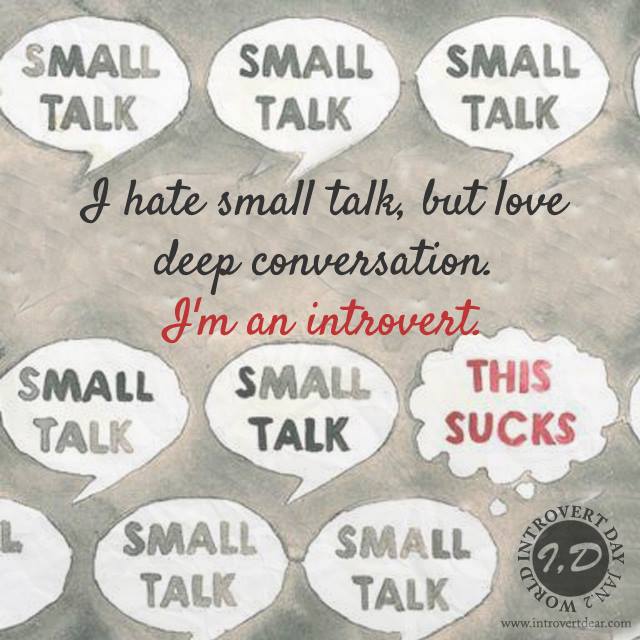
Showing posts with label extrovert. Show all posts

Sunday, October 27, 2024

From Brontë to Patchett

I just finished reading The VertsAnn Patchett's latest children's book beautifully illustrated by Robin Preiss Glasser. The contrasting preferences for a birthday celebration between two siblings reminded me of the contrast between a set of cousins in Emily Brontë's Wuthering Heights

In Chapter 24 of Wuthering Heights, Catherine Linton recounts the contrast between Heathcliff's son summed up in their different ideal summer days:

Blue birds


'One time, however, we were near quarrelling. He said the pleasantest manner of spending a hot July day was lying from morning till evening on a bank of heath in the middle of the moors, with the bees humming dreamily about among the bloom, and the larks singing high up overhead, and the blue sky and bright sun shining steadily and cloudlessly. That was his most perfect idea of heaven's happiness: mine was rocking in a rustling green tree, with a west wind blowing, and bright white clouds flitting rapidly above; and not only larks, but throstles, and blackbirds, and linnets, and cuckoos pouring out music on every side, and the moors seen at a distance, broken into cool dusky dells; but close by great swells of long grass undulating in waves to the breeze; and woods and sounding water, and the whole world awake and wild with joy. He wanted all to lie in an ecstasy of peace; I wanted all to sparkle and dance in a glorious jubilee. I said his heaven would be only half alive; and he said mine would be drunk: I said I should fall asleep in his; and he said he could not breathe in mine, and began to grow very snappish. At last, we agreed to try both, as soon as the right weather came; and then we kissed each other and were friends.


These two statements, in particular, encapsulate the differences between introverts who need to 
 recharge in quiet surroundings and extroverts who feel inviograted by activity:

"He wanted all to lie in an ecstasy of peace; I wanted all to sparkle and dance in a glorious jubilee. I said his heaven would be only half alive; and he said mine would be drunk: I said I should fall asleep in his; and he said he could not breathe in mine."

In Pratchett's book, we have that difference depicted in Ivan's desire for solitude and quiet versus Estie's desire to throw a party with a lot of guests and noise. Thought Emily would not have used the terms attached to "vert," as a staunch introvert herself, she, certainly, would have recognized that aspect of human nature. 


Order these here 

Related

Perspectives on Introversion

Working Alone


Sunday, June 13, 2021

Jane Austen and Autism


 Some years ago, I wrote about introversion in Jane Austen's heroines here:  Jane Austen's heroines.  What was left out of that perspective was a consideration of introverted heroes. They include both Edward Ferrars and Colonel Brandon in Sense and Sensibility. But the most beloved introvert hero of all is Mr. Darcy of Pride and Prejudice.


Mr. Darcy exhibits such extreme introverted behavior in the earlier parts of the book that some readers interpret it as signs of being on the spectrum. I first came across that theory in a YouTube video


To be fair, it doesn't quite claim that Mr. Darcy is autistic but that what defines his comfort zone, as well as his way of thinking and responding to social and conversational cues really resonates with those who are neuroatypical. 

A few days after I happened across that video, I found the source of theory of Darcy as autistic in Deborah Yaffe's book Among the Janeites It stems from a speech therapist named Phyllis Ferguson Bottomer. Her inspiration was not the book itself but the A&E adaptation that she watched in 2002. She zeroed in on the important interaction in Ch. 31 in which Elizabeth relays her point of view of  Mr. Darcy's rudeness, and he explains himself:

“I certainly have not the talent which some people possess,” said Darcy,“of conversing easily with those I have never seen before. I cannot catch their tone of conversation, or appear interested in their concerns, as I often see done.”

Bottomer seized on the parallel between this explanation and how Temple Grandin explained her experienced her experience as an autistic in her autobiography: "I have always have a hard time fitting in with this rhythm."

Bottomer was so convinced that the novel portrayed people on the spectrum that she started presenting at Jane Austen conferences and wrote her own book on the subject: So Odd a Mixture: Along the Autistic Spectrum in 'Pride and Prejudice.'

I haven't read Bottomer's book, but I have read quite a number of books on introversion (see links
Pride and Prejudice gold-plated necklace
 below). I'm also an introvert myself and do understand the reluctance to make small talk and throw oneself into a dance when one is feeling not truly connected to those around one. 

Perhaps one would argue that introverts have some autistic tendencies, but one could just as well say that autistics have some introvert tendencies. In a Venn diagram, there would be an overlap between the two. Bearing that in mind, one need not conclude that anyone with those shared tendencies is necessarily on the spectrum, or that perhaps we should really normalize what is considered neuroatypical as typical because introverts do make up a substantial number of the population, as much as half, according to Laurie Helgoe. 


Whether one attributes Mr. Darcy's standoffishness to autistic tendencies or to a natural proclivity for introversion, the assumption Jane Austen and Elizabeth make is that it can be countered. In this key exchange, she likens conversational social skills to playing an instrument and so gently chides him by way of analogy: 

“My fingers,” said Elizabeth, “do not move over this instrument in the masterly manner which I see so many women’s do. They have not the same force or rapidity, and do not produce the same expression. But then I have always supposed it to be my own fault—because I will not take the trouble of practising. It is not that I do not believe my fingers as capable as any other woman’s of superior execution.”

Darcy takes this as her seeing a point of commonality between them, which makes him feel more at ease in her presence. Notice how often he responds to what she says with a smile, and this is one of those instances:


Darcy smiled and said, “You are perfectly right. You have employed your time much better. No one admitted to the privilege of hearing you can think anything wanting. We neither of us perform to strangers.”


He takes this to mean she understands them, but in truth she doesn't yet. That will take more time and more opening up on his end, risking vulnerability, which many introverts find extremely difficult. But that is the key to their whole relationship: Darcy has to overcome his natural inclination to connect with Elizabeth, and she has to let go of her extrovert assumption that she can take a full and accurate read on others instantly. They are the paradigm of a successful marriage of opposites.


See
Jane Austen Silhouette Wine Glass


Sunday, May 1, 2016

Living on 24 hours a day


Though the contexts may vary from those cloaked in spiritualism with suggestions of meals with a Buddah to those that guide you to a state of mindfulness, the essence of self-help books seems to be very much the same. 
And yet you are in search of happiness, are you not? Have you discovered it?
The chances are that you have not. The chances are that you have already come to believe that happiness is unattainable. But men have attained it. And they have attained it by realising that happiness does not spring from the procuring of physical or mental pleasure, but from the development of reason and the adjustment of conduct to principles.

That's what struck me when I read the really short book, How to Live on Twenty-Four Hours a Day by Arnold Bennett with a copyright date of 1910.  The author consciously references other book titles that say "How to live on X amount a day" to emphasize the point that time is money and even more precious and more evenly distributed than currency. I took a copy out from the library, but you can read the entire text online for free from the Gutenberg project here.
The book's central theme is maximizing one's time to achieve happiness, though not the happiness one pictures in a extroverted sense (see  http://uncommoncontent.blogspot.com/2013/08/happiness-is.html). The happiness is rather the result of achieving harmony between one's principles and one's actions. This point is revealed in chapter 8: 
We do not reflect. I mean that we do not reflect upon genuinely important things; upon the problem of our happiness, upon the main direction in which we are going, upon what life is giving to us, upon the share which reason has (or has not) in determining our actions, and upon the relation between our principles and our conduct.

The book is a 20th Century product, so it's no longer deferring to the Church for guidance on how to live. Rather it is exhorting one live according to principles and reason. In contrast to Disney's advice to follow your heart, you are advised to use your head. But in doing so you also gain an appreciation for science, art, music, literature (if those things interest you) or even your own daily life. What would be packaged today as "mindfulness," he calls reflecting on genuinely important things. 


Chapter 5 is entitled "Tennis and the Immortal Soul." The conjunction here is not intended to suggest a deep connection as one finds in  Zen and the Art of Motorcycle Maintenance. On the contrary, the suggestion is that tennis and other leisure pursuits are what people regard as important while they neglect the type of "cultivation of mind" that the author believes is essential to feed the soul. That becomes clear from the end of the chapter:
 But I do suggest that you might, for a commencement, employ an hour and a half every other evening in some important and consecutive cultivation of the mind. You will still be left with three evenings for friends, bridge, tennis, domestic scenes, odd reading, pipes, gardening, pottering, and prize competitions. You will still have the terrific wealth of forty-five hours between 2 p.m. Saturday and 10 a.m. Monday. If you persevere you will soon want to pass four evenings, and perhaps five, in some sustained endeavour to be genuinely alive. And you will fall out of that habit of muttering to yourself at 11.15 p.m., "Time to be thinking about going to bed." The man who begins to go to bed forty minutes before he opens his bedroom door is bored; that is to say, he is not living.But remember, at the start, those ninety nocturnal minutes thrice a week must be the most important minutes in the ten thousand and eighty. They must be sacred, quite as sacred as a dramatic rehearsal or a tennis match. Instead of saying, "Sorry I can't see you, old chap, but I have to run off to the tennis club," you must say, "...but I have to work." This, I admit, is intensely difficult to say. Tennis is so much more urgent than the immortal soul. 


I find it fascinating that the core of such advice is so consistent for over a century, despite the massive changes the world has seen over two World Wars and the rapid advance of technology. That is not to mitigate the differences in contexts. They are quite striking. Clearly, the people the book addresses are not feeling the same stress people do today when they rise early to commute to work and return from it. Work begins for them at 10 AM and ends at 6 PM. The commute is assumed to take at most half an hour, though there also is an assumption of a sixth half day of work ending at 2 PM.


For people living in England in 2010, leisure time is not frittered away in front of a screen (not even a movie screen, never mind a smartphone, computer, or television). Even a radio is out of the picture, as music is only to be found in live events. Still they manage to fritter away time but just by doing this and that until thinking of going to bed for a good 45 minutes before doing so. In that way, one lets time slip through one's fingers instead of getting one's real 24 hours' worth. In fact, the author doesn't expect one to use all 24 hours but just to make better use of the time spent outside work by exercising one's mind for 90 minute sessions and actively reflecting at other times when is apt to adopt a "semi-comatose" state.

Another difference most of today's self-help books and this one is that very little attention is paid to exercise of the body. Bennet does mention that 10 minutes a day of that can make a difference. However, he is not arguing that one needs to put in the time for the physical regimen but for exercising the mind and getting it into shape. Likely people walked a lot more just to get around as we're talking about a time before cars were owned by the average person.

Chapter 7 is entitled "Controlling the Mind," and like many modern books on meditation, the goal is to achieve concentration and focus, though Bennet skips the thinking about nothing step and jumps right into focusing on your end goal:
"What? I am to cultivate my mind in the street, on the platform, in the train, and in the crowded street again?" Precisely. Nothing simpler! No tools required! Not even a book. Nevertheless, the affair is not easy. When you leave your house, concentrate your mind on a subject (no matter what, to begin with). You will not have gone ten yards before your mind has skipped away under your very eyes and is larking round the corner with another subject. Bring it back by the scruff of the neck. Ere you have reached the station you will have brought it back about forty times. Do not despair. Continue. Keep it up. You will succeed. You cannot by any chance fail if you persevere.
When you achieve a certain mindset, you can appreciate that "nothing in life is humdrum" as stated by the title of Chapter 10. In that chapter Bennet demonstrates how an appreciation of cause and effect can make one more philosophical and less shocked when things don't go one's way with the example of accepting one's stolen watch as the result of knowable causes. But it's not just a matter of learning to appreciate human nature but all of nature:"The whole field of daily habit and scene is waiting to satisfy that curiosity which means life, and the satisfaction of which means an understanding heart." That is something that can even be appreciated by someone who does not care for art, music, or literature. But for those who do care for the latter, Bennet devotes an entire chapter.

"Serious Reading" is the title of Chapter 11. By using that term, Bennet's intention is to exclude novels because they do not require the mental exertion that should be applied to the 90 minute program. Good novels are all too easy to read, he says, and bad ones just aren't worth reading at all. It's remarkable that what was considered merely popular literature then are are now seriously studied in college courses. Wouldn't any reader today be proud for working her way through something like Anna Karenina if she were not required to read it for a class? Bennet has loftier reading goals, as he indicated by his own choice of reading, including the works of Marcus Aurelius (he doesn't leave home without him in book form), Epictetus, Pascal, La Bruyere, and Emerson. No women featured here, though he does reserve special praise for Elizabeth Barrett Browning and recommends that everyone read Aurora Leigh.


Aside from praising poetry over prose, Bennet offers two concrete suggestions for the one who embarks on improving reading:

The first is to define the direction and scope of your efforts. Choose a limited period, or a limited subject, or a single author. Say to yourself: "I will know something about the French Revolution, or the rise of railways, or the works of John Keats." And during a given period, to be settled beforehand, confine yourself to your choice. There is much pleasure to be derived from being a specialist.
The second suggestion is to think as well as to read. I know people who read and read, and for all the good it does them they might just as well cut bread-and-butter. They take to reading as better men take to drink. They fly through the shires of literature on a motor-car, their sole object being motion. They will tell you how many books they have read in a year. Unless you give at least forty-five minutes to careful, fatiguing reflection (it is an awful bore at first) upon what you are reading, your ninety minutes of a night are chiefly wasted. This means that your pace will be slow. Never mind. Forget the goal; think only of the surrounding country; and after a period, perhaps when you least expect it, you will suddenly find yourself in a lovely town on a hill.


Related post: http://uncommoncontent.blogspot.com/2013/11/its-meaningful-life.html
http://uncommoncontent.blogspot.com/2014/12/views-on-boundaries.html


Tuesday, December 23, 2014

The marriage of opposites

Shakespeare begins Sonnet 116 with the declaration, "Let me not to the marriage of true minds/ Admit impediments." In real life, some marriages may not be based so much on the coming together of minds but on the attraction of opposites. That's the case for introverts who marry extroverts, as was the case of each of the three authors featured in Perspectives on Introversion.
The two could complement each other, and come, potentially, come up with a better balance than a couple consisting of two social butterflies who always seek out a crowd or two introverts who end up staying home all the time. On the other hand, the two might clash when it comes to deciding how often to go to parties, entertain others, and how many guests to invite. 
The extrovert may push for more social opportunities, which recharge his/her energies, while the introvert may feel stressed by having to constantly make small talk at such gatherings. Is it inevitable that they end up citing irreconcilable differences in divorce court?
Not necessarily.
In her book, Quiet: The Power of Introverts in a World That Can't Stop TalkingSusan Cain, who admits to being an introvert happily married to an extrovert explains that being married to one's social opposite can work quite well. The key is to understand the other's point of view and arrive at a compromise that will be a win-win for both. She offers the example of such a couple in conflict over the gregarious husband's desire for weekly dinner parties. His introvert wife dreaded such social situations and wanted to be absent from them, a solution that did not appeal to him. The winning solution was one that cut back the parties to twice a month and that changed the format to a buffet style with flexible seating that allowed the shy wife to select a seat at an edge or within a smaller group that would allow her to opt out of small talk and opt into more meaningful, intimate conversations. Other conflicts over public versus private outlets could be resolved in similar ways.

Sunday, December 7, 2014

Views on Boundaries

Personality types and introversion recently came up on one of the online boards  on which I comment. It made me consider another aspect of the difference between introverts and extroverts. It's not just a matter of people who need to be alone to recharge in contrast to those who need to be around other people to feel energized. There are real differences between the two in how they view the way people should relate to each other, and that can give rise to misunderstanding or the wrong assumptions, and, yes, I'm thinking of a particular incident.

From what I've observed, introverts assume that boundaries should be in place unless otherwise specified, whereas extroverts are more likely to assume the opposite. Consequently, while an extrovert would assume it is neighborly to drop in on someone, an introvert would rarely do so unless s/he is expressly invited to come at a particular time. That doesn't mean the introvert doesn't like his/her neighbor but that the assumption is that people want to be left alone unless they tell you otherwise.

Now to get to the particular incident of different assumptions of what constitutes polite behavior, here's the example. I had a friend who stayed in the empty house of a neighbor of a relative once. Said relative told me afterward that the friend was shocked at what the friend did. I was imagining all sorts of horrific scenarios and then was told that the really shocking thing was this: the friend did not pick up the mail that was put through the door slot. Now if you're an introvert, your assumption of boundaries would tell you to leave as much of someone else's stuff alone as possible. That would extend to handling someone else's mail that just happened to be delivered through the door. It takes an extroverted mindset to assume that showing such respect for someone else's privacy is a lack of courtesy.

I'm now adding one other example about circumspection with respect to boundaries, as it just happened. I commented on someone's post and referred to a Talmudic story to make my point. Someone else said I was misrepresenting it and said I got the name wrong. In truth, I would do the same, but only if I were 100% sure that the other person got it wrong.  

In this case, the name I had written was correct. I ascertained it again for myself by getting out the primary source. When I pointed that out, the woman who had disagreed with me had to concede that point and then made excuses for herself that she had just been on a long flight, etc., etc. I understand making mistakes when tired. I do that myself and have even been guilty of making typos I would normally spot. However, I would not ever challenge someone on the basis of at hazy recollection, and then say, well, what do you want from me, I was tired.

Friday, November 22, 2013

Public, or it didn't happen

The title is a variation on the "Pictures, or it didn't happen" demand that we sometimes see in comments on posts. The idea is that the visual is necessary to really convince the audience that the account is true. (Why seeing should be believing in the age of Photoshop and CGI is beyond me, but I can visualize things through descriptive texts).

To return to the title, though, it refers to the way some  extroverts see the world -- only things that happen in public really matter. In the introvert universe, though, what transpires in private counts just as much as what happens in public, sometimes even more so.

Lately, there's a trend to make introversion more socially acceptable by stressing that it's not a matter of being anti-social, just of needing to recharge with alone time. However, that really is an overly simplistic reduction. There are real differences between introverted and extroverted perspectives on interaction that extend beyond what one may prefer to do during leisure time to feel revitalized.

I believe that accounts for how extroverts forget about things that are very important to introverts but have no public impact. For example, after I had a baby and couldn't drive for a while, someone nearby promised she would drive my son, along with her own kids, into school. Even though she made the offer on her own and not in response to my request for a favor, she forgot all about it. Another woman I carpooled with for camp just failed to show up on the last day because she decided not to send her kid in then and couldn't even be bothered to let me know by phone.

 I don't think it's just a matter of general forgetfulness but the way extroverts process things require a more public event for them to rank as important. Letting down someone in private just doesn't count. On the other hand, should the introvert skip a party filled with people with no real common interests, well, that's a crime not to be forgiven.


More recently, I've seen this happen again in variations. The extroverts involved would, undoubtedly, claim that they are nice people. But they really have no empathy for the introverted way of thinking -- that which is private also matters, especially when it is a matter of keeping your word and not letting down someone who thought you could be relied on. But in their mind, only what happens in public is important.


Related posts:
http://uncommoncontent.blogspot.com/2014/12/views-on-boundaries.html
http://uncommoncontent.blogspot.com/2013/08/happiness-is.html
http://uncommoncontent.blogspot.com/2012/04/great-introvert.html
http://uncommoncontent.blogspot.com/2012/04/working-alone.html
http://uncommoncontent.blogspot.com/2012/05/perspectives-on-introversion-this-is.html
http://uncommoncontent.blogspot.com/2013/06/jane-austens-heroines-from-extroverted.html

Wednesday, June 5, 2013

Jane Austen's Heroines: Ranging from Extroverted Emma to Introverted Fanny

                               Jane Austen Fiber Doormat


If I were to rank Jane Austen’s heroines on a scale of most extroverted to most introverted, Emma Woodhouse would be at one end and Fanny Price on the other. Elizabeth Bennett would be pretty close to Emma, and Anne Elliot would be second to Fanny on the introvert end.  There are errors that result from both extremes, though Jane Austen seems to stack the deck in favor of introverted heroines.


Extroversion leads the heroine to err with nearly disastrous consequences in Emma. Emma is not to occupy herself in solitary pursuits like reading. There are a few references to her constantly writing up reading lists but never getting through the books on them.  She craves company and influence over others. So when her governess leaves to marry, she feels compelled to find a new companion in the person of Harriet Smith. Then she sets out to remake the character and even history of her friend, giving her unrealistic expectations.  Mr. Knightly castigates Emma for her attempt to redirect Harriet’s life, and  Emma concedes at the end that he was right. Emma likely sees the ugly side of extroversion for herself in the patronizing way Mrs. Elton directs Jane Fairfax.  

In Pride and Prejudice, the exchange in which Miss Bingley attempts to label Elizabeth by claiming that all that interest her is reading is very telling. While Elizabeth is a reader, she doesn’t want to be thought of as a boring bluestocking, a role which may be more readily embraced by an introverted character.  Elizabeth is nothing if not vivacious, though the person closest to her is her sister Jane who is her opposite in some way.  

Jane is sweet and innocent, in the sense that she fails to suspect others of any motives less pure than her own. In contrast, Elizabeth is witty – sometimes bitingly so – and quick to judge others in a negative light.  Elizabeth is the one who concedes her error. But her friend, Charlotte Lucas, who proves most perceptive, suggests that Jane’s shyness was what made it possible for Mr. Bingley to doubt her genuine affection for him.

Mansfield Park’s heroine, Fanny Price, manages to win her heart’s desire though, even though she is careful to keep her feelings for her cousin to herself. Her introversion is not presented as a sign of weakness but of strength. She is certain of what is correct and will not budge from her refusal to participate in the theatricals even when everyone else gives up on any scruples of morals or modesty.  Fanny is the only one of Austen’s heroines who is presented as being perfect in the sense that she has nothing to improve on in the course of the novel as the extroverted heroines do.

Persuasion l Compact Mirror


What happens when an introverted heroine lacks that kind of confidence in her moral sense is presented in Persuasion. Like most introverts, Anne Elliot is a good listener, who provides calming comfort to the more highly-strung members of her family. But she comes to realize that too much listening to others is what caused her own loss of happiness when she allowed her friend (a woman who cast herself in the role of Emma) to persuade her to reject Frederick Wentworth.  As the novel ends happily, she does get a second chance, but she does first recognize the error of her former ways. While she is more right about others than extroverted characters prove, she has to learn to assert her own point of view. Ultimately she does, and gains the perfection and perfect happiness allotted to Fanny Price.

Note: Jane Austen fans can find a variety of merch here: https://www.zazzle.com/store/totally_jane_austen

Wednesday, May 30, 2012

Perspectives on Introversion (this is a long post)


Within the space of a number of weeks, I read

Order these here 

 three books on introverts. I started with most recent and most publicized within that category: Susan Cain’s Quiet: The Power of Introverts in a World That Can't StopTalking(2012) 

Unlike the authors of the other two books, Susan Cain is not a psychologist. She actually started out as a Wall Street lawyer. Having recognized her own ability to negotiate based on introverted traits and became a consultant and writer. Her book reflects some careful research and interviews with some insight based on her own experience.  


The pieces of the book may have functioned as separate articles. She talks about quiet strength in heroic figures like Gandhi and Rosa Parks – who partnered with the more extroverted Martin Luther King, Jr.  She runs through the problem for introverts at school who are utterly silenced by the dynamics set into play by group divisions and work places that  that torture introverts with open plans. She also looks at the contrast between Asian (quiet, introverted) culture and American (louder, extroverted) culture and how those caught between two worlds cope.  

While Cain is generally very positive about introvert traits, the book does include sections on faking it as an extrovert, which she calls “self-monitoring.”  It becomes necessary for any introvert whose life’s passion includes the necessity of interacting with groups of people, whether it is a professor who must deliver lectures or an author who must promote her book.

The second book I read on the topic was The Introvert Advantage: How to Thrive in an Extrovert World by Marti Olsen Laney (2002).  I found this one seriously annoying at times. The fact that the author insists on referring to introverts as “innies” made me want to take Dorothy Parker’s advice about a certain novel and throw it with great force. However, I refrained from doing so because it was a library book and I was resolved to follow through on reading, for persistence is one of the great introvert traits.

Laney’s book is just loaded with advice, much of which is not particular to introverts – like pack
sunscreen, drink water (add some lemon juice to pick yourself up) and dress in layers to assure comfort. She justifies the inclusion of such by saying that introverts tend to have sensitive skin and also may be more sensitive to temperature changes with a tendency to be cold. Well, I do slather on the sunscreen but not because of any introvert traits. Such practical but somewhat irrelevant advice is a minor annoyance, as far as this book goes.


 What is more problematic is the way she constructs an introvert. She stresses that introverts are set in a “throttle-down” mode which makes it take longer for them to process information and more stimulant-averse. That may be true, but really I have not found that being an introvert makes me any slower than other people. In fact, I move pretty quickly and efficiently. 


 The thing that most bothers me about Laney is that her book title is completely misleading.  The way introverts come off, poor, delicate, slow creatures who are easily overwhelmed, they really have no advantage. In fact, in order to survive they simply must learn how to act and talk like an extrovert. 


 The lowest point for me in the book is when she offers suggestions to make small talk that include gems like “Isn’t the food delicious?” and “Isn’t this a lovely home?” Yup, that’s just what introverts despise – empty conversation just to fill in the silence.  If you have to resort to such stratagems, you may want to consider Lincoln’s observation, “Better to remain silent and be thought a fool than to speak out and remove all doubt.”  


In contrast to Laney's approach, Laurie Helgoe’s book, IntrovertPower: Why Your Inner Life Is Your Hidden Strength (Sourcebooks 2008)  is the ultimate introvert manifesto. It pretty much say, “We make up at least half the world’s population; we have the right to be ourselves and not conform to any other standard.” She spends quite a bit of time debunking the perception that introverts make up only 1/3 of the world and so are overwhelmed by the majority made up of extroverts. She points to flaws in statistics and identification to make the case for over 50% of people qualifying as introverts.  Cain does touch on the perception of numbers but does not make the larger number central to her approach.


 I admit I found this book a lot more fun to read than Laney’s. It also flowed rather more organically than Cain’s. She does touch on Japanese culture, as Cain did, but in a much more brief and personalized way. The focus of the book nearly always comes back to Helgoe’s assertion of being an unapologetic introvert.  That is someone who does not buy into the argument that she is missing out on the fun that extrovert have: “The Socially Accessible introvert looks like an extrovert on the outside and sees extroversion as a bar that he or she can never quite reach. These individuals are often very successful in social arenas, but fault themselves for not having fun.”  That leads to feelings of “alienation from self” which can result in depression (p 27).  


Her positive spin on introvert traits really resonated with me, like the definition on p. 7: 

being an introvert does not mean you’re antisocial, asocial, or socially inept. It does mean that you are oriented to ideas…. It means that you prefer spacious interactions with fewer people. And it means that, when you converse, you are more interested in sharing ideas than in talking about people and what they’re doing. In a conversation with someone sharing gossip, the introvert’s eyes glaze over and his brow furrows as he tries to comprehend how this conversation could interest anyone.   It is also important to recognize that it’s not just a matter of preference, but of survival:
“For introverts, being ‘talked to death’ is very much like being beaten on the head. … most of us feel drained of life energy. Talk can hurt us, and protecting ourselves from harm is not rude” (133).

 In contrast to Laney’s advice for making conversation in social situations, Helgoe insists that you can be an introvert when interacting at a party: “Be real. If you want real, be real. You don’t have to keep small talk small. You can be polite without selling out. You can acknowledge someone without grinning from ear to ear. Let your depth be evident in your manner, and the people you meet will actually meet you.” (p. 153)


Along the same lines, (on p. 127) she offers ways “to ‘go deep’ with people you find through introvert channels:”
Don’t…
Introduce topics that bore you – i.e, ‘Where do you work?’
Ask questions that can be answered with ‘fine’ – i.e., ‘How are you?’
Do…
Ask question you don’t know the answer to – i.e., ‘When did you first know you wanted to teach?’
Ask for personal definitions – i.e., ‘Help me understand. When you say the film was ‘dark’ what does that meant to you?’
Observe. Notice how it’s going. Allow silence. Don’t try too hard.

Helgoe includes the biographical detail that she came from a family of ten children but chose to have only two because of her introverted nature.  While very devoted to her husband and children, she does not feel guilty about taking time – even overnight retreats – for herself. Like Cain, she likes to coffee bars, and will park herself in one for hours. But her preference is to travel out to one not in her neighborhood. In the inverse of the assumption of the “Cheers” theme song, sometimes she wants to go where no one knows her name. She wants to be around people that she can choose to engage with – or not – with no obligation to catch up and converse if she wishes to remain alone in the crows.

The three books touch on the pleasures and perils of mixed marriages, as conflict is inevitable when an introvert is wedded to an extrovert.  Cain offers a nice example of a compromise that does not make either side give in (see the-marriage-of-opposites), while Laney says she and her husband take turns selecting vacation destinations (I noticed that Amazon includes The Introvert and Extrovert in Love: Making It Work When Opposites Attract by Marti Laney PsyD MFT and Michael Laney (2007), though it has only 9 reviews)


All three introvert writers are women married to extroverts. They also all happen to be mothers – with Cain and Helgoe both identifying their children as boys, while Laney is already a grandmother.  So they do have much in common, and the books do, inevitably offer some overlap. However, each has her own take on what is central to the introvert experience. 

Cain’s is quiet, Laney’s seems to be a slower pace, while Helgoe’s is escape from intrusion.  Now, if I were to come up with my own take on introversion, it would be autonomy – being allowed the space and the independence to do what one wants without having to check with another. 

For the chemistry that underlies the difference in preferences for pleasurable outlets between introverts and extroverts, see Introverts and Extroverts: The Brain Chemistry Behind Their Differences

Related posts 

Working alone
The Great Introvert
Jane Austen's Heroines Ranging from Extroverted Emma to Introverted Fanny 
Happiness is
Views on Boundaries
Public or it didn't happen

I appreciate your attention and generosity. Tips accepted via Zelle.

If you enjoyed this content, you can support my work with a tip or purchase from my Zazzle store.

If you enjoyed this content, you can support my work with a tip or purchase from my Zazzle store.
Find great gifts and party accessories for literature lovers in all price points.