Showing posts with label Shakespeare. Show all posts

Thursday, February 20, 2020

The Marriage Plot: Expectations for Novel Ending Must Be Met

It is a truth universally acknowledged that the Austenian literary paradigm demands that the heroine get her man.
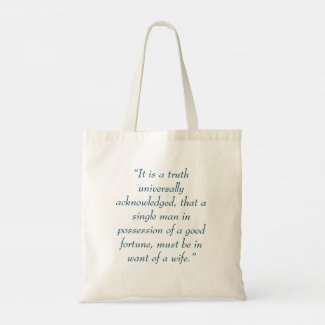
Pride and Prejudice  Tote Bag
Pride and Prejudice Tote Bag
by Totally_Jane_Austen

Bronte's bestseller 
"Reader, I married him," is among the most memorable lines in English literature. It's also one of the reasons why a lot more people reads Charlotte Bronte's Jane Eyre --  a story that has successfully been translated to the screen time and time again -- than her more mature novel, Villette. Ever see an adaptation of Villette? I haven't either.

Granted, Jane Eyre is a more likable heroine than Lucy Snowe. But the difference in endings and romantic resolutions are a key difference.  While Jane does get to decline a proposal, she also does get to marry her man on her own terms. In contrast, in Villette, the heroine only can picture her own reunion with her beloved professor that will not be realized.

I do recall one professor in graduate school considering that a triumph because she thought that actually having to live with M. Paul Emanuel would prove irritating. However, the tone is not one of "I dodged a bullet there," so much as "I'll have to make it on my own now. I will endure despite the loneliness."  That's not really what readers tend to expect in novels built on the framework of classic comedies.

Rooted in Shakespeare
If you've ever taken a Shakespeare class, you should already know that the definitive trait of comedy is not humor but a happy ending in which all the problems and threats are smoothed away, and society can function smoothly. As it says near the end of A Midsummer Night's Dream:  "Jack shall have Jill/ Nought shall go ill."

 Shakespeare always included a marriage or two on the horizon to point out that social harmony is indeed restored. In that way, it echoes the stereotypical fairy tale structure that ends with the prince and the princess marrying and assurance that they "lived happily ever after."

While there are novels that follow the plot  lines of classical tragedy, as we see in the works of Thomas Hardy, as well as novels that declare themselves free of heroes, as is the case of Vanity Fair,  the novels that fit the chick lit mold set by Jane Austen work out very much like Shakespeare's comedies. Stability is restored at the end, and the heroine is happily married.

The expectation was built up by the paradigm of novel forms that supplanted many others: the books written by Jane Austen. That was the model of women's writing pushed on Bronte. Though she rebelled in her own way by insisting on an vividly outspoken though plain-looking governess rather than a lady who never had to earn her living as her heroine, she did, ultimately conform to the marriage plot in Jane Eyre. 

Bronte's other two complete novels, The Professor and Shirley do have  marriages, though they are rarely included in  English literature courses. (Loads more than you probably wish to know about the complete Charlotte Bronte oeuvre in (En)gendering Romanticism: A Study of Charlotte Bronte's Novels ) By the time she got to Villette, she e felt confident enough to deviate from the formula, though the result is that a very fine novel gets far less name recognition and rates no box office appeal.

Little Women as Chick Lit
Now let's cross the Atlantic and jump ahead a bit in history to consider Louisa May Alcott's masterpiece, Little Women.  My alternative title for this blog was  "Why Louisa May Alcott's Heroine Could Not Remain a Literary Spinster."

As the latest adaption of the classic beloved by generations of girls sought to  highlight in its framing of the ending, the author did not intend to marry Jo off at all. (Read about that here: https://www.historyextra.com/period/victorian/history-little-women-louisa-may-alcott-writer-who-when-how-much-inspired-by-life/)  Despite reader pressure, she declared, I won’t marry Jo to Laurie to please anyone.”
https://upload.wikimedia.org/wikipedia/commons
/thumb/9/9c/Little_Women_-_frontispiece.png/


But her idea to leave her heroine as a "literary spinster" would not go over, and so she took perverse pleasure in marrying Jo off to “a funny match," the much older, somewhat stodgy Professor Friedrich Bhaer. (Though I haven't done real research into Alcott's reading, I find it hard to believe that the German Bhaer was not somewhat inspired by the professor figure in Bronte's works. )

Whatever you feel about the Laurie ship veering off course from Jo to Amy, which does come off as contrived, indeed, the potential resolution of leaving Jo as the solitary artist figure scribbling alone would have disappointed readers, likely made the book sell fewer copies, and certainly resulted in far fewer film adaptations.

Think of another heroine beloved by generations of young girls, Anne Shirley. While readers enjoy her continued adventures as a young single women, working as a teacher and earning her university degree, the expectation that she will end up with Gilbert Blythe is built in from the moment he says, "Carrots!' It can be delayed through several books, but it is, ultimately, inescapable for the books and the screen adaptions that have multiplied in recent years.

Exceptions do not disprove the general rule
That is not to say that no novels without marriage resolutions are adapted. Certainly some are, though not nearly with the same frequency as those that do feature the conventional happy ending.
Having the heroine remain single is not nearly as satisfying in terms of mass appeal.


The reader now may be bristling at the thought that we retain the same kind of conventional expectations even in modern times. Aren't we now enlightened enough to appreciate a story that does not end like a child's fairy tale? Yes, certainly, some of us are. But when success is measured in terms of pleasing the most possible people, you do need to stick to certain conventions.

Austen fans in a tizzy
This becomes clear in the reactions to the ending of the Sanditon series. If you look on IMDB, you'll see that while most episodes rate about an 8, some even close to 9. But the final episode only rates a 6.9 and includes some individual ratings as low as one from viewers who were bitterly disappointed in the ending. Here's a typical one star review:
If you are going to finish a Jane Austen story, please give it a Jane Austen ending! I have really enjoyed this series but the ending completely ruined it all. All I can think is they wanted to leave it open for series two? But why wreck a whole series in the hope to hook people to a second. The ending this story deserved would have made me watch a second, but this? Doubtful!
The argument is if you're going to bank on the Austen name to lure us in, you better deliver on the promised happy ending we've grown to expect from the completed six novels. Obviously, the producers of the series intended to not end the first season with the happily ever after for the heroine because there had been hopes of a second series, but that is not enough to assuage the outrage born of expectations unmet.

The pull of the marriage plot in a Jane Austen work  is simply too strong to be disregarded. Working against type here would leave your readership or audience is disconcerting as they feel cheated out of the social resolution  established in for the genre of comedy and the novel about women.


Related: 

Jane Austen: Love and Money
Love and Limerence in Jane Austen

Tuesday, December 23, 2014

The marriage of opposites

Shakespeare begins Sonnet 116 with the declaration, "Let me not to the marriage of true minds/ Admit impediments." In real life, some marriages may not be based so much on the coming together of minds but on the attraction of opposites. That's the case for introverts who marry extroverts, as was the case of each of the three authors featured in Perspectives on Introversion.
The two could complement each other, and come, potentially, come up with a better balance than a couple consisting of two social butterflies who always seek out a crowd or two introverts who end up staying home all the time. On the other hand, the two might clash when it comes to deciding how often to go to parties, entertain others, and how many guests to invite. 
The extrovert may push for more social opportunities, which recharge his/her energies, while the introvert may feel stressed by having to constantly make small talk at such gatherings. Is it inevitable that they end up citing irreconcilable differences in divorce court?
Not necessarily.
In her book, Quiet: The Power of Introverts in a World That Can't Stop TalkingSusan Cain, who admits to being an introvert happily married to an extrovert explains that being married to one's social opposite can work quite well. The key is to understand the other's point of view and arrive at a compromise that will be a win-win for both. She offers the example of such a couple in conflict over the gregarious husband's desire for weekly dinner parties. His introvert wife dreaded such social situations and wanted to be absent from them, a solution that did not appeal to him. The winning solution was one that cut back the parties to twice a month and that changed the format to a buffet style with flexible seating that allowed the shy wife to select a seat at an edge or within a smaller group that would allow her to opt out of small talk and opt into more meaningful, intimate conversations. Other conflicts over public versus private outlets could be resolved in similar ways.

Wednesday, March 5, 2014

Cuts and shurgs: observations on RSC 2008 Hamlet

 I finally saw the Royal Shakespeare Company's (RSC) 2008 stage of Hamlet, which is available in full online free (completely legal) here.  Nearly all productions of Hamlet make extensive cuts because the full play would run around 4 hours. That's what Kenneth Branagh aimed for with his film version. The run time for this one is just over 3, and like many adaptations it cuts the appearance of  Fortinbras at the end. 

This is meant as a video version of a stage productions, so it is generally limited to what you would see on a stage without film enhancements. The notable exception to that is the use of camera views that I believe was used to replace the effect the live production had achieved in placing a large mirror in front of the audience. That generally works well, particularly as reference to ubiquitous CCTV cameras that would be familiar to people around London (making their way in NYC now, as well). 

Some reviewers didn't care for another camera effect: that of actors addressing it directly when speaking some of the lines, particularly Hamlet for some of his soliloquies. I remember having the same reaction many years ago when watching a BBC performance of The Merchant of Venice in a Shakespeare class in college. Then I found it distracting, though not so much here. I believe that the reason why we find it jarring on a screen is that the close-up makes it seem rather like breaking the frame of the actors within a play when they come face-to-face (as if on a video call) with us. When you would see it on the stage, it would be far less intrusive because of the physical distance between the performer and the audience. 

David Tennant is engaging with some of the same mannerisms he brings to the the Doctor's character, though without the sideburns. I found some of the mad antics a bit much. (Admission of personal bias: I'm give to understatement rather than overstatement and do read Hamlet as an introverted intellectual.)  They must have been the  director's idea, as Ophelia did the same kind of thing. 

I didn't really care much for Ophelia who didn't get to convey any emotion other than hysteria and madness. When calm, she was rather wooden. As for stripping down  to her underwear for her madness, some pointed out that it was inconsistent with the description of her drowning, which is attributed to the weight of her water-logged clothes. That's a good point.  

I can think of two possible defenses for the direction here, though I wouldn't have gone that route myself. One is that Ophelia's mad entrance is described as entering with her down. For Shakespeare's audience, that would have been seen as a state of undress, as a properly put together young lady would have her hair contained. To achieve that in modern terms, the hair alone wouldn't cut it. Two: in King Lear, when Edgar assumes madness, he strips off his clothes, so that typical mad behavior in Shakespeare.

 I didn't like the way the Mousetrap scene was done -- overly crude and in-your-face kind of obvious. I suppose they thought otherwise the Shakespearian double entendres would just fly over the audience's head.  There is also the bit of anachronism of male actors for female roles when the play is set in modern times, though I suppose that may be meant to contrast the more realistic contemporary look of the production we are watching with the artifice of the players' performance.

One thing that I liked in  that scene was the transference for the cameras. Hamlet rebels against being caught by the cameras and then uses one himself in recording the play and catching Claudius' reaction. 

The king's reaction is much calmer in this production than the way it comes across in other. He carries a lantern over to Hamlet and shows him with a shake of the head that he knows that Hamlet knows, and he's letting him know that he knows. That may be going just a bit far, given that Claudius resumes the pose of liking Hamlet for the fencing match, and why would Hamlet go along knowing that he knows that he knows?

What I liked in the last scene was a kind of closing the circle visual. The cut Hamlet put into his own hand after speaking with the ghost, remains a reminder for a while with a bandage. At the end he transfers the same cut -- also on the left hand -- to Claudius. That makes the actor's controversial shrug a bit more understandable, as he is already poisoned. 

As we don't have the textual ending of Fortinbras, the play ends with Horatio's emotional farewell to his friend, who has died in his arms. That makes it a rather more intimate death than one that would get the royal honors that Fortinbras said he would bestow on the prince of Denmark. 

Overall: I wouldn't go so far as some who claim this is the definitive Hamlet for the 21st century, but it's one that most people would probably enjoy watching.  I suppose that each generation has to endure assumptions about how Hamlet is to be made accessible to them. At least this one doesn't open with a summation like Laurence Olivier's opening to his film version: "This is the story of a man who could not make up his mind." 

Speaking of how the generations reinterpret Shakespeare's play, you can watch a sort of companion to the production video, Tennant's exploration of the play's enduring popularity also available online  (note the video is just a tad out of sync).

The most striking thing for me in that video was seeing the rare first editions of Shakespeare housed in the British Library handled  so casually -- no gloves. When I had to use books in the New York Public Library's Arents Tobacco Collection, I had to be more careful with an Oscar Wilde typescript.  But I was a mere student at the time, and one of my Grad Center professors was a disciple of  Stephen Greenblatt.

Back then New Historicism was still, well, new. Greenblatt's appearance in this video indicates that his approach is not quite mainstream.  Shakespeare is subjected to biographical details inserted into understanding his plays with the Hamnet/ Hamlet connection. The name of Shakespeare's son who died in childhood was Hamnet, which does sound an awful lot like Hamlet, but is not quite the same. It's hard to hear the difference  in the video which accepts the connection as a given. It's Greenblatt's argument in "The Death of Hamnet and the Making of Hamlet." Some of the argument is rather forced, but I won't get into all of that here.


Tuesday, April 23, 2013

Happy (early) birthday, Shakespeare


I was wondering about April 23rd really being Shakespeare's birthday, given the shift from the Julian to the Gregorian calendar. I found that addressed at bloggingtherenaissance.blogspot.com

In fact, we don't have a record of Shakespeare's birth, though we do have one of his christening on April 26, 1564. The assumption is that he was born 3 days before that.  

However, April 23rd of 1564 was a date based on the Julian calendar. What's the effect of the shift to the Gregorian calendar?

The Julian calendar was made up of 365 1/4 days a year. It defined the dates of Europe from the days of Julius Caesar in 45 BCE through 15821 adding up to ten extra days by that time.  

That changed in 1852 when  Pope Gregory XIII reformed the calendar, subtracting those ten days with a massive leap forward. That year the day after October 4th was designated October 15th.  Talk about losing time!

England being England, though, and not considering itself subject to Catholic rule, adhered to the Julian calendar for nearly two more centuries. It only adopted the Gregorian calendar in 1752. 

By then an additon day was added on January 1, 1700. A day was also added 100 years later and 100 years after that. However, there was no additional day added in 2000.

According to the calculations of that blog, Shakespeare's April 23rd birthday actually translates into a May 3rd birthday in the Gregorian calendar.

I appreciate your attention and generosity. Tips accepted via Zelle.

If you enjoyed this content, you can support my work with a tip or purchase from my Zazzle store.

If you enjoyed this content, you can support my work with a tip or purchase from my Zazzle store.
Find great gifts and party accessories for literature lovers in all price points.