Wednesday, April 10, 2019

Why is this year's Haggadah different from the one distributed all other years?


You don't have to be a coffee drinker to be familiar with Maxwell House Haggadoah. The paper-backed English versions of the classic seder liturgy have been been a staple of the spring holiday shopping scene since 1932. It holds a place of distinction in the Haggadah chronology, which shares some insight about its origins.

The Haggadah was the brainchild of the Joseph Jacobs Advertising Agency of New York City. This was content marketing before the term was likely even used, building up an association between the holiday with the greatest focus on food and family in the Jewish calendar with a major brand name that wasn't even Jewish.

Why did Maxwell House do it? Maxwell House Coffee was kosher for Passover certified way back in 1923Coffee itself is not a product subject to leavening or classified with legumes, though instant coffee may contain maltodextrin, which can be derived from both of those categories. Most major brands of coffee produce instant coffee that is acceptable for Passover, although none have linked their name with the central text of the seder in the way Maxwell House has done.

Consequently, the translation of the traditional Hebrew (with some Aramaic) text adopted by the Maxwell House Haggadah  held sway over many Jewish American homes for a large part of the last century. . It remained fixed until 1998 when it was first revised and then again in 2011 when the text was further updated, dropping antiquated expressions, as well as references to four sons in favor of gender neutral children.

But this year's Haggadah is different from previous ones because it includes a a special limited edition  available for orders on Amazon. This Haggadah declares it to be a "new edition: not for 2019 but 1958. That's because it's "The Marvelous Mrs. Maisel" edition. Just as in stores, this Maxwell House Haggadah is free with purchase of the coffee, which would have to be ordered on Amazon.

So now we have a multiplied content marketing effect: the Haggadah that promotes coffee is also promoting a show on Amazon Prime. Or maybe it's the show that would end up promoting the coffee, as fans likely will order some coffee just to get their limited edition Haggadah. Considering the fact that the free Haggadah is currently listed for sale on eBay for $1202.53, it would seem a wiser move to lay out $6.02 to get it along with some coffee with your Amazon order.

P.S. A couple of days after I posted this, I got an email informing me of a significant price drop on this Haggadah at eBay. Here's what it said:

From a relative position $60.47 appears to be a bargain -- were it not for the fact that you could still get it free from Amazon. But Amazon also has some sellers looking to take advantage of consumers who would be willing to pay for a free item. It also has the Haggadah listed for sale, and the price is still lower than than the eBay's listing even after the price cut. 

Sunday, February 10, 2019

True love meets marketing

In email from Modcloth


from Banana Republic
When a holiday invented on a TV program becomes a real thing, we can only marvel at how right Oscar Wilde was in declaring, "Life imitates art far more than art imitates life."


Galentine's Day was born in a script for the 22nd episode of Parks and Recreation that first aired on NBC on February 11, 2010. In the episode named for the newly invented holiday, the holiday is presented not to supplant Valentine's Day but to offer a supplement to it. It sets aside February 13th as the day to celebrate women's friendship,with gifts and gatherings.


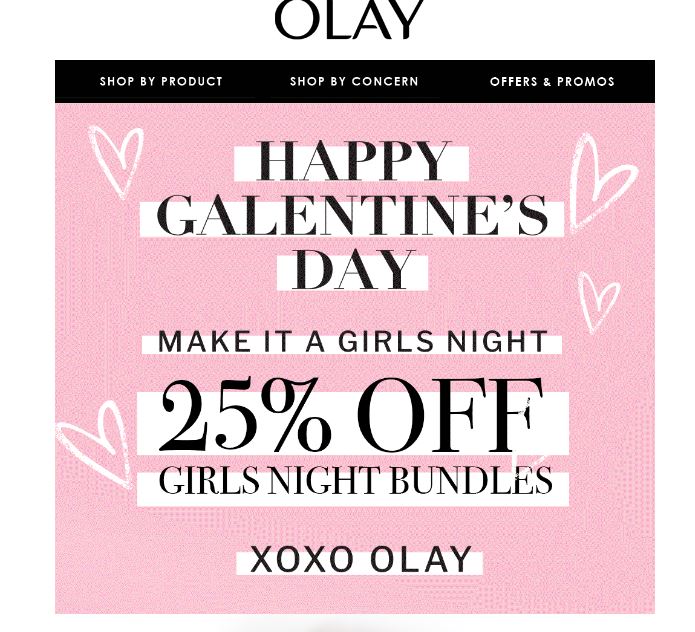
As someone who has never watched the program, I had not heard of Galentine's Day until a couple of years ago when businesses started to latch on to the day as cause for marketing clothes, cosmetics, brunches, etc. In fact, this year, I already received emails from the likes of Target, ModCloth, Gap brands and Olay with messages like the ones I copied here.

Clearly, marketers know an opportunity when they see it (even if some publications on marketing have failed to take note) and by 2019 Galentine's Day is a marketing holiday in its own right. Granted, Galentine's Day has not yet made it to the status of being counted among the holidays covered by National Retail Foundation (NRF). However, the force behind the Galentine's Day movement is a factor in the revision of Valentine's Day itself.

 The Evolution of Valentine's Day 

A 2013 article entitled "The Reconceptualization of Valentine’s Day in the United States: Valentine’s Day as a Phenomenon of Popular Culture"argues that the holiday was reborn in the US in 1840s, largely due to the rise of marketing, which extended the celebration through the promotion of gifts and cards: " Even though the holiday historically involved primarily young men and women, the range of individuals included in the celebration of Valentine’s Day was expanded in the United States to any and all ages through aggressive marketing techniques directed at both the young and old, consequently increasing the amount of Valentine’s Day consumers."

Certainly, there is no let up of marketing around such a lucrative holiday. This year, the NRF estimates a record-breaking  $20.7 billion will be spent on Valentine's Day, and that's even in the case of just 51 percent of people saying this will be celebrating it. That's because those who are spending are spending more, and not just on the red roses and romantic dinners. Cards and gifts for friends and indulgences one buys for oneself are propping up those spending amounts. As the NRF itself observes, the spending patterns for Valentine's Day have changed over the past decade.

The Galentine's Day Factor and Modern Princesses

The change noted by NRF fits well with the timing of the rising influence of the Galentin'se Day Phenomenon over that same period of time. Even for those who do not set aside February 13th as the day to mark the value of female friendships, the attention it -- among other key relationships outside romantic ones -- deserve has taken over a greater share of Valentine's Day itself. For an easily accessible barometer of pop culture, we'll look at the evolution of  Disney movie plots.

The cultural shift in celebrating various loves in life can even be seen in Disney movies of this period. While the classic princess stories, starting with the 1937 Snow White,  had always culminated in finding her prince, that has also evolved. Let's look at 2010: in Tangled, Rapunzel does meet a man she falls for her, he is not a prince, and they do not even commit to marry by the end of the film. So there is some deviation from the classic romantic plot there. By 2012, there is no romantic interest interest offered at all for the heroine of Brave who is motivated by her love for her family. But the really big change arrives the following year in Frozen in which the trappings of romantic love are presented only to be rejected, and the transformative power of true love is shown to be the bond of sisters.

True love, no longer the province of a  princess bride now can be taken to apply to friends and family, and so Valentine's Day itself is being redefined as a holiday of love that is not bounded by romantic tropes. Of course, marketing will take advantage, and we even have sellers who can take advantage of those whose spending is devoted to "anti-Valentine's Day" gifts.

I appreciate your attention and generosity. Tips accepted via Zelle.

If you enjoyed this content, you can support my work with a tip or purchase from my Zazzle store.

If you enjoyed this content, you can support my work with a tip or purchase from my Zazzle store.
Find great gifts and party accessories for literature lovers in all price points.